

Advertisements
Nearly 4 in 10 Americans would struggle to cover a $400 surprise expense today. This gap turns ordinary setbacks into financial crises.
This guide shows practical, step-by-step ways to save for emergencies. It helps readers in the United States build an emergency savings fund without big lifestyle changes.
The guide focuses on manageable tactics and clear next steps. Anyone can learn how to save for emergencies and make steady progress.
The article moves in a logical order. Readers will first understand why an emergency savings fund matters. Then, they will assess their finances and pick the right savings account.
Next, it teaches readers how to build a budget that includes saving. It covers starting small, automating contributions, and staying on track.
Finally, it shows how to use the fund properly and overcome common obstacles.
By the end, readers will know realistic ways to build an emergency fund. These ways reduce stress and protect against unexpected costs.
The guide also helps create lasting saving habits without feeling overwhelmed.
Key Takeaways
- Many Americans lack even a small buffer — saving for emergencies starts with small, consistent steps.
- An emergency savings fund reduces financial stress and protects against sudden expenses.
- Practical strategies focus on ease: simple budgeting, the right account, and automation.
- The guide favors sustainable habits over drastic lifestyle changes for long-term success.
- Progress is measurable: setting realistic goals makes building an emergency fund achievable.
Understanding the Importance of Emergency Savings
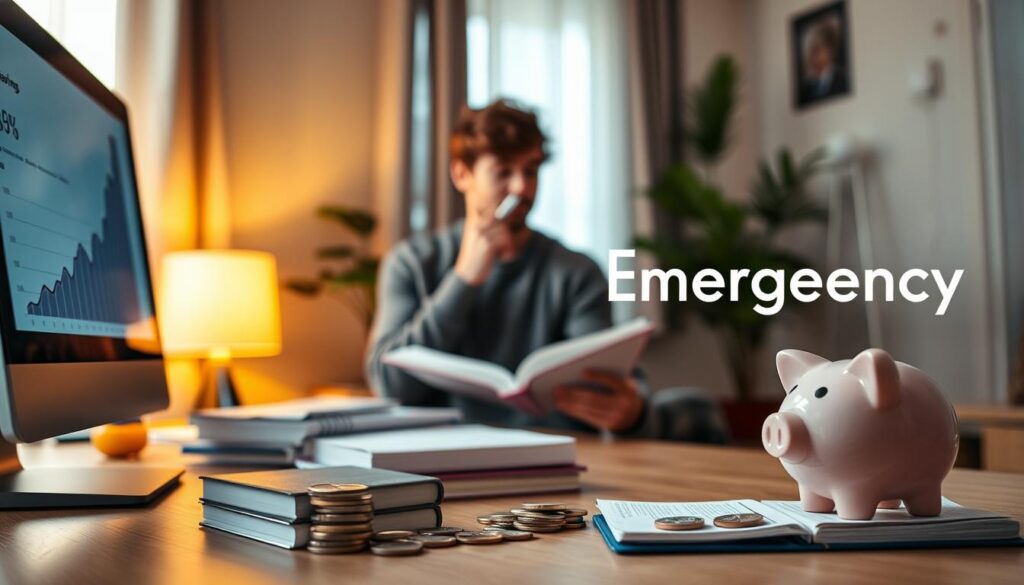
Building an emergency savings fund gives households a clear financial safety net.
This short passage explains core ideas so readers can start saving for emergencies without confusion.
Defining Emergency Savings
Emergency savings are liquid, low-risk cash set aside for unplanned events.
They differ from general savings and investments because they must preserve capital and be easy to access.
Examples include money for sudden medical bills, car repairs, urgent travel, or job loss.
A true emergency savings fund avoids volatile assets and keeps funds in accounts that can be withdrawn quickly.
The 50/30/20 Rule Explained
The 50/30/20 rule divides take-home pay into needs, wants, and savings.
Fifty percent covers essentials, thirty percent covers discretionary spending, and twenty percent goes to savings and debt repayment.
Within that twenty percent, someone can prioritize a starter emergency goal of $500 to $1,000.
After hitting that target, the saver can scale up to three to six months of essential expenses in their emergency savings fund.
Those with variable income or living in high cost-of-living areas may adjust percentages.
Freelancers and hourly workers might build a larger buffer or save more until stability improves.
Why Every Household Needs an Emergency Fund
An emergency fund reduces reliance on high-interest credit cards and payday loans.
It gives families flexibility during income shocks and keeps long-term investments from being sold at the worst time.
Common emergencies include home repairs, sudden medical care, and unexpected unemployment.
Research links steady savings to faster financial recovery after setbacks and less stress for families.
Having this financial safety net encourages better decisions under pressure.
It makes everyday planning easier and supports goals by preventing forced withdrawals from retirement accounts.
Assessing Your Financial Situation
The first step toward financial resilience is a clear snapshot of income and outgo. This helps with how to save for emergencies and guides emergency fund strategies.
A brief review of tools and simple math makes the process manageable for anyone.

Analyzing Monthly Expenses
Begin by gathering bank and credit card statements for three to six months. Use budgeting apps like Mint or YNAB, or a spreadsheet, to list every payment.
Categorize each item as fixed or variable and mark essentials like rent, utilities, groceries, transportation, insurance, and minimum debt payments.
Calculate a baseline monthly essentials figure by summing those categories. That baseline is the core number for setting realistic savings goals.
Also decide how many months of coverage the emergency fund should hold based on that baseline.
Identifying Potential Emergency Scenarios
Make a list of common emergencies: job loss, medical bills not fully covered by insurance, major car or home repairs, emergency travel, and legal expenses.
People in commission-based roles, freelance work, or single-earner households should raise their target range for emergencies.
Consider family specifics like dependents or chronic health issues. Occupation-specific risks change the fund’s size and timing.
Note these factors when choosing an emergency fund strategy.
Setting Realistic Savings Goals
Use a tiered approach for clarity. A starter fund of $500–$1,000 covers small shocks. The short-term goal is one to three months of essentials.
The full target is three to six months for most people, or six to twelve months for high job-risk professions.
Turn targets into timelines by dividing the goal by a realistic number of months. For example, $6,000 over 12 months equals $500 per month.
Irregular income earners should average monthly income over 12 months or save a fixed percentage of each paycheck to keep steady progress.
These steps on analyzing monthly expenses and setting realistic savings goals form the foundation for practical emergency fund planning.
Consistent tracking and small adjustments create workable emergency fund strategies that fit everyday life.
Choosing the Right Savings Account
Picking the right account affects how fast an emergency fund grows and how easily you can use it. The choice should balance yield, fees, and ease of access. Readers should weigh interest rates against practical needs when building a safety net.
High-Yield Savings Accounts Compared to Traditional Accounts
High-yield savings accounts often offer higher APYs than traditional banks. Online providers like Ally, Marcus by Goldman Sachs, Capital One 360, and Discover pay rates that help emergency funds grow passively.
Traditional banks may charge fees or require higher minimum balances. Both account types usually have FDIC insurance, so safety is similar. Fee schedules and minimums matter for saving emergencies.
The Benefits of Online Banks
Online banks often give better interest rates, lower fees, and easy-to-use mobile apps. These features simplify monthly contributions and balance checks.
Automated transfers are easy to set up, helping you save consistently. Downsides include fewer physical branches and harder check deposits. Customer service quality can vary by provider.
Still, many savers prefer online banks for rate advantages and convenience.
Accessibility and Withdrawals
Accessibility and withdrawals need a balance between liquidity and discipline. Emergency funds must be reachable through debit transfers or ACH while avoiding impulse spending.
Since Regulation D limits no longer restrict withdrawals, many accounts allow quick transfers. A laddered approach can help: keep a core balance in savings and put parts in short-term CDs or money market accounts.
When planning access, test transfer times and hold policies. The right mix supports saving best practices without losing cash when it’s needed most.
Creating a Budget That Includes Savings
Building a clear plan helps anyone control their money well. Creating a budget is the first step to save consistently. It reveals where income goes and where cuts can free up cash for what matters.
The Importance of Budgeting
Budgeting works like a financial map to guide spending. Zero-based budgeting assigns a job to every dollar. The envelope method limits spending by category.
The 50/30/20 rule divides needs, wants, and savings into clear percentages. Each approach shows cash flow clearly and makes budgeting easier to start.
Allocating Funds for Emergencies
Treat emergency savings like a fixed monthly bill you must pay. Paying yourself first builds saving into a powerful habit. For instance, to save $6,000 in 12 months, set aside $500 each month.
Put saving for emergencies before unnecessary spending. Cancel or cut subscriptions, eat out less, and move small expenses to savings. Even saving $25 to $50 weekly adds up fast.
Adjusting Your Budget as Needed
Budgets need to change with life’s ups and downs. Use raises or bonuses to boost emergency savings. When income drops, first reduce spending on wants.
For those with variable income, save more in good months and less when money is tight. Review your budget every one to three months. Regular checks help keep your budget realistic and strong.
| Goal | Time Frame | Monthly Allocation | Action Steps |
|---|---|---|---|
| $3,000 emergency fund | 12 months | $250 | Cancel two subscriptions, shift $60/week dining budget to savings |
| $6,000 emergency fund | 12 months | $500 | Automate transfer on payday, reduce entertainment spend by $120/month |
| $10,000 emergency fund | 24 months | $417 | Use bonus or tax refund to add lump sum, cap discretionary buys |
Starting Small: How to Begin Saving
Starting small makes building an emergency fund manageable. Tiny steps lower stress and form a saving habit. Readers will learn simple moves for tight budgets and busy lives.
Micro-Saving Strategies
Micro-saving means making tiny, regular contributions that add up. Round up card purchases to the nearest dollar and save the difference. Drop $5–$20 aside each week.
Use a jar for spare change or a digital one in a bank app. Small amounts grow with time and compounding. This approach helps save for emergencies without big sacrifices.
Using Apps to Help Save
Saving apps simplify habits and track progress. Acorns rounds up and offers investment options. Chime has automatic savings in FDIC-insured accounts. Qapital uses rules-based goals for savings. Digit analyzes spending and moves funds automatically.
Banks like Capital One and Ally also have auto-save tools in apps. Check fees, security, and FDIC insurance before choosing. A trusted app protects your money and privacy.
Automating Your Savings
Automating savings removes friction and decision fatigue. Set regular transfers from checking to savings on payday. Use direct deposit splits if your employer offers them. Increase savings when you get a raise.
Automation keeps saving steady and supports long-term emergency funds. Systems handle transfers so you can focus on other priorities while saving.
Tips for Sticking to Your Savings Plan
Keeping a clear routine helps people stay on track with saving for emergencies. Small, regular habits reduce the stress of saving for unexpected expenses.
A simple plan that fits a busy life makes emergency fund strategies manageable and long lasting.
Establishing set moments to review progress builds accountability. Monthly or biweekly check-ins let someone compare balances with goals. Calendar reminders and app notifications make these check-ins automatic.
Creating a visual progress tracker clarifies momentum. A chart showing starter fund, half-way point, and full target makes progress feel real.
Visuals help when saving money for unexpected expenses seems slow.
Setting Up Reminders and Check-Ins
Schedule a short review on the same day each month or every other week. Use Google Calendar or Mint reminders to prompt updates. Note any spending changes and adjust contributions during reviews.
Keep a simple spreadsheet or paper chart to log deposits and milestones. A quick glance at progress reduces decision fatigue and supports long-term fund strategies.
Celebrating Your Milestones
Rewarding progress prevents burnout without harming the fund. Choose low-cost treats like a favorite coffee, a family walk, or an afternoon with a good book.
Non-monetary rewards help strengthen the saving habit. Define clear milestones: starter fund, first month fully funded, midpoint, and full target.
Avoid celebrations that erase savings gains. If a treat costs money, plan it into the budget so the fund stays intact.
Staying Motivated During Tough Times
When income drops or bills spike, protect the core emergency fund. Pause low-priority contributions before tapping the fund. Cutting nonessential spending keeps the plan moving without draining savings.
Look for short-term income options like freelance work, gig shifts, or selling unused items. Extra earnings speed up rebuilding and ease pressure from unexpected costs.
Keep reminders of the benefits nearby. A note about reduced stress and greater resilience can help someone persist. These mental cues support long-term commitment and strengthen emergency fund strategies.
When and How to Use Your Emergency Fund
Knowing when to use emergency fund money helps keep your savings working as planned. A clear rule separates urgent needs from wants.
This guide explains what counts as emergencies, how to plan for unexpected costs, and how to refill your fund after use.
Defining qualifying emergencies
Qualifying emergencies involve sudden events that threaten income, safety, or basic living. Examples include job loss, large medical bills, urgent home repairs, and emergency travel for serious illness or death.
Elective purchases, vacations, regular bills, and lifestyle upgrades do not count as emergencies. Using the fund for wants lowers financial security and may lead to high-interest debt in real crises.
Planning for unexpected expenses
Start with a list of likely emergencies and estimated costs for each. Use local averages for repairs and medical needs when possible. This guides how big your fund should be.
Insurance helps reduce out-of-pocket expenses. Review health, auto, and home policies to check deductibles and coverage before setting savings goals.
Building relationships with trusted service providers speeds repairs and gives clearer cost estimates for your planning.
Replenishing your fund after use
After using the emergency fund, set a firm timeline to restore the balance. Create a repayment plan that fits your household budget.
Temporarily adjust discretionary spending to free cash for rebuilding your fund. Direct unexpected money like tax refunds or bonuses to the account.
Avoid relying on credit cards or loans to replace your emergency fund unless you have clear and affordable repayment plans.
| Step | Action | Why it matters |
|---|---|---|
| 1 | List qualifying emergencies with cost estimates | Guides how to save and sets realistic targets for when to use emergency fund |
| 2 | Check insurance deductibles and coverage limits | Reduces unexpected out-of-pocket expenses and refines fund size |
| 3 | Build relationships with local service providers | Speeds response and yields better cost estimates for planning for unexpected expenses |
| 4 | Create a replenishment timeline and repayment schedule | Ensures disciplined rebuilding and avoids long-term depletion |
| 5 | Use windfalls to accelerate replenishing your fund | Shortens the period of vulnerability after an emergency |
| 6 | Review and adjust targets yearly | Keeps the fund aligned with changing expenses and risk |
Overcoming Common Obstacles
Many people want to save for emergencies but face barriers that slow their progress. This section shares practical steps to overcome these obstacles. It includes clear tactics for real-life situations.
Tackling Debt Before Saving
High-interest debt from credit cards or payday loans can erase months of progress. Experts at NerdWallet and Bankrate suggest choosing a repayment method that fits psychology and math. The debt snowball pays off the smallest balances first for quick wins.
The debt avalanche targets the highest interest rates to lower total interest paid. Keeping a starter emergency fund of $500–$1,000 helps avoid high-cost credit for small emergencies. After this cushion, focus on aggressive debt repayment while making small automatic savings contributions.
Managing Lifestyle Inflation
When income grows, spending often grows too. This lifestyle creep reduces how much a person can save. A practical step is to route a portion of raises directly into savings.
Many workers at Google, Amazon, or regional employers automate savings increases after income rises. Another tactic is to note financial priorities and pause discretionary upgrades. Keeping a modest lifestyle and allowing upgrades that match long-term goals helps keep a safety net growing.
Dealing with Unexpected Setbacks
Medical bills, job loss, or urgent home repairs can upset plans. Having a contingency plan helps when setbacks happen. Pause nonessential subscriptions and negotiate payment plans to free short-term cash.
Community resources like food banks, utility aid, and unemployment benefits offer fast relief. Combining supports with an emergency checklist and mental readiness cuts panic and improves handling unexpected setbacks.
- Starter fund: $500–$1,000 before heavy debt paydown.
- Repayment: Choose snowball for motivation or avalanche for cost savings.
- Income boosts: Automatically increase savings after raises.
- Backups: Use community aid and negotiate bills during crises.
Incorporating Savings Into Your Financial Goals
Emergency savings act as a foundation for larger plans. They protect retirement accounts, college funds, and investments from forced withdrawals during a crisis.
Aligning emergency savings with long-term goals
Start by building a starter emergency fund equal to three months of essential expenses. That base shields long-term goals so a market dip or job loss does not derail retirement or education investments.
Once the starter fund exists, sequenced contributions make sense. Prioritize the emergency buffer before heavily funding volatile long-term investments, especially for those with low risk tolerance.
Balancing saving with investing
After an adequate starter emergency fund, split surplus cash between paying high-interest debt, contributing to employer retirement matches like a 401(k), and making steady emergency contributions. This approach keeps both short-term security and long-term growth on track.
Age, income stability, and market conditions affect the split. Younger savers with steady income can lean toward investments. Those with unstable income should focus on a larger financial safety net.
Reviewing and adjusting goals regularly
Review goals at least once a year and after major life events like marriage, having a child, job change, or home purchase. These reviews help align emergency savings with new responsibilities.
Use clear triggers for adjustment: reduced job stability, more dependents, significant health changes, or moving to a higher cost-of-living area. Regular reassessment keeps plans realistic and resilient.
Educating Yourself on Financial Health
Learning to manage money starts with clear and reliable guidance. Educating yourself on financial health builds habits that support saving. These habits help prepare for emergencies and long-term goals.
Short, focused learning works better than long, scattered reading for those who need practical next steps.
Below are trusted places to start. These financial literacy resources offer unbiased tools, calculators, and plain-language articles. They suit readers who want to move from theory to action.
Recommended Financial Literacy Resources
The Consumer Financial Protection Bureau (CFPB) offers guides on budgeting and emergency funds. The Federal Reserve provides research and simple explainers about saving and liquidity.
Publishers like NerdWallet, Investopedia, and The Balance break complex topics into useful steps. For personalized help, the National Foundation for Credit Counseling (NFCC) links people to nonprofit counselors for debt and savings planning.
Free Online Courses and Workshops
Free online courses build skills without pressure. Platforms like Coursera, edX, and Khan Academy offer classes on budgeting, debt management, and basic investing.
Community colleges often run low-cost workshops on emergency planning. Employers sometimes provide financial wellness programs as part of benefits.
Local libraries and community centers host seminars on budgeting and saving. These options let learners try concepts before committing to paid services or long-term plans.
The Value of Financial Advisors
Professional advice is helpful for complex situations. Certified Financial Planners (CFPs) act as fiduciaries and must work in the client’s best interest.
This matters when handling taxes, estate planning, or large investment decisions. Commission-based advisors may suit certain investment purchases but can create conflicts of interest.
Those worried about cost should look for nonprofit advisors or planners who offer sliding-scale fees. Checking credentials and fee structures helps find advisors who add real value.
| Need | Recommended Resource | Why It Helps |
|---|---|---|
| Basic budgeting | CFPB, Khan Academy | Clear guides and exercises to track income and expenses |
| Understanding credit and debt | NFCC, The Balance | Nonprofit counseling and step-by-step debt plans |
| Saving strategies | NerdWallet, Investopedia | Comparisons of accounts and practical tips for saving for emergencies |
| Structured learning | Coursera, edX | Course paths on personal finance and investing from universities |
| Personalized planning | Fiduciary CFPs, nonprofit advisors | Customized cash-flow models and guidance for complex finances |
The Role of Mindset in Saving
Mindset shapes how people approach saving for emergencies. A clear mental framework helps turn good intentions into steady action. Short habits, specific goals, and a calm attitude reduce panic when money gets tight.
Building a Savings-Oriented Mindset
Begin with measurable goals. They might be a three-month emergency cushion or $1,000 for urgent repairs. Break larger targets into weekly or monthly milestones to keep progress visible.
Use identity cues such as saying, “I am a saver.” Pair saving with routine events like payday. Habit-stacking makes saving automatic by linking it to actions already in place.
The Psychological Benefits of Saving
Having a buffer lowers anxiety during income shocks and improves sleep. Behavioral finance research shows that a fund reduces impulsive choices and supports planning over short-term urges.
Small wins build confidence. Each deposit reinforces calm and clearer decision-making. The psychological benefits of saving improve overall wellbeing beyond money.
Overcoming Fear Around Money Management
Shame and avoidance often block progress. Start with tiny, achievable steps to build self-efficacy. Private learning resources and supportive communities can ease the process.
When anxiety is severe, professional help such as a financial counselor or therapist can provide strategies. Combining practical steps with emotional support helps overcome money fear.
| Mindset Technique | Action | Expected Result |
|---|---|---|
| Specific Goal Setting | Define amount and deadline for saving for emergencies | Clear target and measurable progress |
| Habit-Stacking | Automate a transfer every payday | Consistent contributions with minimal effort |
| Identity Cue | Adopt saver self-talk like “I am a saver” | Stronger commitment and resilience |
| Small Wins | Celebrate milestones such as first $500 saved | Increased motivation and reduced stress |
| Support Resources | Join forums, take workshops, consult advisors | Knowledge, accountability, reduced isolation |
Consistent attention to mindset builds a strong savings habit. Over time, saving feels easier, and money challenges can be faced with less fear.
Inspiring Stories of Successful Savers
A short collection of practical experiences shows how ordinary people build safety nets without drastic lifestyle changes. Each example highlights clear steps and repeatable tactics. Readers can adapt these tactics to their own situations.
The following stories reflect real-life emergency fund success. They share common lessons that come after financial setbacks.
Real-Life Examples of Emergency Fund Success
A single parent used direct deposit to set small automatic transfers to a high-yield savings account at Chase. By cutting three streaming and subscription services, she saved a six-month cushion over two years.
A freelance graphic designer put 10% of every payment into a separate Ally account. This built a two-month buffer within a year. A recent homeowner focused on a $2,000 starter fund before renovation loans.
They used mortgage escrow timing and bank round-up features to speed up savings. These stories show how automation and small cuts lead to steady results.
Lessons Learned from Financial Setbacks
People facing medical bills or job gaps share common lessons. They see the value of a starter fund and the need to rebuild quickly after withdrawals. Pairing savings with insurance is also helpful.
Many stress that automation and small, regular deposits cut temptation and stress. These lessons inspire stronger routines and smarter risk planning.
Community Support and Savings Challenges
Group accountability speeds progress. Employer savings challenges, local credit union workshops, and online groups like Reddit’s r/personalfinance or Facebook budgeting groups provide tips and encouragement.
Challenges such as 30-day no-spend efforts, roundups from apps like Qapital or Acorns, and nonprofit savings circles create momentum. Community support turns personal goals into shared wins and helps build emergency funds.
FAQ
What exactly qualifies as an emergency expense and how is it different from regular savings?
How much should someone save for emergencies?
FAQ
What exactly qualifies as an emergency expense and how is it different from regular savings?
Emergency expenses are unexpected and essential costs. They threaten your financial stability if unpaid. Examples are job loss, major medical bills, urgent car or home repairs, or emergency travel.
Emergency savings are liquid, low-risk funds saved for these specific events. Regular savings or investments target planned goals like vacations, home down payments, or retirement.
Emergency funds focus on liquidity and preserving capital. This avoids selling investments or high-interest credit during crises.
How much should someone save for emergencies?
A common rule is three to six months of essential living expenses. Those with unstable income or high job risk might save 6–12 months.
Start with a small fund of 0 to
FAQ
What exactly qualifies as an emergency expense and how is it different from regular savings?
Emergency expenses are unexpected and essential costs. They threaten your financial stability if unpaid. Examples are job loss, major medical bills, urgent car or home repairs, or emergency travel.
Emergency savings are liquid, low-risk funds saved for these specific events. Regular savings or investments target planned goals like vacations, home down payments, or retirement.
Emergency funds focus on liquidity and preserving capital. This avoids selling investments or high-interest credit during crises.
How much should someone save for emergencies?
A common rule is three to six months of essential living expenses. Those with unstable income or high job risk might save 6–12 months.
Start with a small fund of $500 to $1,000 and build up. Calculate your target by totaling monthly essentials and multiplying by your chosen months.
Irregular earners should use a 12-month income average or save a percentage of each paycheck for flexibility.
Should emergency savings be kept in a checking account, savings account, or invested?
Emergency funds need to be liquid and low-risk. A high-yield savings account at an FDIC-insured bank usually works best.
Traditional savings accounts often offer lower returns. Avoid stocks since market ups and downs risk losing access when needed.
Some keep funds in a high-yield savings account plus short-term CDs or money markets for slightly higher returns with access.
Are online banks safe for emergency savings and which ones are recommended?
Reputable online banks are safe if they provide FDIC insurance. They often offer higher APYs and lower fees than traditional banks.
Recommended online banks include Ally, Marcus by Goldman Sachs, Capital One 360, and Discover. Consider customer service, mobile experience, and transfer speeds.
If branches matter to you, combine an online savings account with a local checking account for convenience.
How can someone who lives paycheck to paycheck start building an emergency fund?
Begin small and set up automatic transfers to a dedicated emergency savings account. Even $10–$25 per paycheck builds momentum.
Use saving tools like round-up apps or fixed amounts per paycheck. Treat savings as a must-pay expense (“pay yourself first”).
Look for quick wins: cancel unused subscriptions, reduce dining out, and apply windfalls like tax refunds to your fund.
What tools and apps can help automate and track emergency savings?
Budgeting and savings apps help automate saving and tracking. Mint and YNAB are popular for budgeting.
Apps like Chime, Qapital, Digit, and Acorns offer automatic savings features. Many banks have built-in auto-transfer and subaccounts.
Check if the app keeps funds in FDIC-insured accounts. Review fees and security before linking your accounts.
How should someone balance paying down debt and building an emergency fund?
First, keep a small emergency fund of $500–$1,000 to cover minor emergencies. This avoids borrowing high-interest debt.
Next, focus on paying high-interest debts like credit cards using debt avalanche or debt snowball methods.
Keep adding to your emergency fund while paying down debt. Also, contribute to employer 401(k) matches as free money.
When is it appropriate to use the emergency fund, and what counts as misuse?
Use the fund for true emergencies: sudden job loss, major uninsured medical bills, urgent car or home repairs, or family travel.
Do not use it for elective purchases, vacations, normal bills, or wants. If you use it, plan to refill it quickly.
Set automatic transfers and consider redirecting discretionary spending or windfalls to rebuild the fund fast.
How can people with irregular income set savings goals?
Calculate your average monthly income over 6–12 months to estimate essentials. Alternatively, save a percentage of each payment—10–30% based on needs.
Start by building a starter fund, then switch to saving a percentage of income. Save more in high-earning months and conserve during slower ones.
Review your goals every 1–3 months to adjust based on income changes.
What strategies help stick to a savings plan over the long term?
Automate transfers on payday and set regular check-ins. Use visual trackers and break goals into small milestones with rewards.
Adjust your budget often, and find accountability through family, online communities like Reddit’s r/personalfinance, or workplace challenges.
During setbacks, pause discretionary savings but avoid spending your emergency fund. Use windfalls or side income to stay on track.
How should someone rebuild their emergency fund after using it?
Write a plan with a timeline and monthly savings targets. Resume or increase automated transfers immediately.
Use bonuses or tax refunds to speed repayment. Cut nonessential spending or subscriptions temporarily to grow funds faster.
Track your progress monthly and adjust your timeline when needed.
When should a person consider professional financial advice about emergency savings?
Seek advice for complex situations like major medical bills, tax issues, estate planning, big investments, or balancing debt and savings.
A certified financial planner (CFP) can offer cash-flow modeling and goal advice. Fee-only advisors and nonprofit counselors are cost-effective options.
Also check if your employer offers financial wellness programs.
What role does mindset play in successfully saving for emergencies?
Mindset is key. Treat saving as a habit and part of your identity. Set goals and imagine the security your fund gives.
Celebrate small wins to boost confidence and reduce shame. Link savings to daily routines and seek community support for persistence.
Over time, saving becomes easier and helps reduce stress while improving money choices.
How often should someone review and adjust their emergency fund goals?
Review your emergency fund yearly and after major life changes like marriage, new child, job change, or moving.
Also reassess if your cost of living or insurance changes. Reviews keep your fund aligned with current needs and risks.
Are there community programs or group strategies that help people save for emergencies?
Yes. Community savings circles, employer savings challenges, nonprofit workshops, and online groups provide support and structure.
Local credit counselors, community banks, Facebook budgeting groups, or Reddit’s r/personalfinance offer peer help and tips.
Structured challenges like no-spend months or round-up campaigns build habits through shared goals and tracking.
,000 and build up. Calculate your target by totaling monthly essentials and multiplying by your chosen months.
Irregular earners should use a 12-month income average or save a percentage of each paycheck for flexibility.
Should emergency savings be kept in a checking account, savings account, or invested?
Emergency funds need to be liquid and low-risk. A high-yield savings account at an FDIC-insured bank usually works best.
Traditional savings accounts often offer lower returns. Avoid stocks since market ups and downs risk losing access when needed.
Some keep funds in a high-yield savings account plus short-term CDs or money markets for slightly higher returns with access.
Are online banks safe for emergency savings and which ones are recommended?
Reputable online banks are safe if they provide FDIC insurance. They often offer higher APYs and lower fees than traditional banks.
Recommended online banks include Ally, Marcus by Goldman Sachs, Capital One 360, and Discover. Consider customer service, mobile experience, and transfer speeds.
If branches matter to you, combine an online savings account with a local checking account for convenience.
How can someone who lives paycheck to paycheck start building an emergency fund?
Begin small and set up automatic transfers to a dedicated emergency savings account. Even – per paycheck builds momentum.
Use saving tools like round-up apps or fixed amounts per paycheck. Treat savings as a must-pay expense (“pay yourself first”).
Look for quick wins: cancel unused subscriptions, reduce dining out, and apply windfalls like tax refunds to your fund.
What tools and apps can help automate and track emergency savings?
Budgeting and savings apps help automate saving and tracking. Mint and YNAB are popular for budgeting.
Apps like Chime, Qapital, Digit, and Acorns offer automatic savings features. Many banks have built-in auto-transfer and subaccounts.
Check if the app keeps funds in FDIC-insured accounts. Review fees and security before linking your accounts.
How should someone balance paying down debt and building an emergency fund?
First, keep a small emergency fund of 0–
FAQ
What exactly qualifies as an emergency expense and how is it different from regular savings?
Emergency expenses are unexpected and essential costs. They threaten your financial stability if unpaid. Examples are job loss, major medical bills, urgent car or home repairs, or emergency travel.
Emergency savings are liquid, low-risk funds saved for these specific events. Regular savings or investments target planned goals like vacations, home down payments, or retirement.
Emergency funds focus on liquidity and preserving capital. This avoids selling investments or high-interest credit during crises.
How much should someone save for emergencies?
A common rule is three to six months of essential living expenses. Those with unstable income or high job risk might save 6–12 months.
Start with a small fund of $500 to $1,000 and build up. Calculate your target by totaling monthly essentials and multiplying by your chosen months.
Irregular earners should use a 12-month income average or save a percentage of each paycheck for flexibility.
Should emergency savings be kept in a checking account, savings account, or invested?
Emergency funds need to be liquid and low-risk. A high-yield savings account at an FDIC-insured bank usually works best.
Traditional savings accounts often offer lower returns. Avoid stocks since market ups and downs risk losing access when needed.
Some keep funds in a high-yield savings account plus short-term CDs or money markets for slightly higher returns with access.
Are online banks safe for emergency savings and which ones are recommended?
Reputable online banks are safe if they provide FDIC insurance. They often offer higher APYs and lower fees than traditional banks.
Recommended online banks include Ally, Marcus by Goldman Sachs, Capital One 360, and Discover. Consider customer service, mobile experience, and transfer speeds.
If branches matter to you, combine an online savings account with a local checking account for convenience.
How can someone who lives paycheck to paycheck start building an emergency fund?
Begin small and set up automatic transfers to a dedicated emergency savings account. Even $10–$25 per paycheck builds momentum.
Use saving tools like round-up apps or fixed amounts per paycheck. Treat savings as a must-pay expense (“pay yourself first”).
Look for quick wins: cancel unused subscriptions, reduce dining out, and apply windfalls like tax refunds to your fund.
What tools and apps can help automate and track emergency savings?
Budgeting and savings apps help automate saving and tracking. Mint and YNAB are popular for budgeting.
Apps like Chime, Qapital, Digit, and Acorns offer automatic savings features. Many banks have built-in auto-transfer and subaccounts.
Check if the app keeps funds in FDIC-insured accounts. Review fees and security before linking your accounts.
How should someone balance paying down debt and building an emergency fund?
First, keep a small emergency fund of $500–$1,000 to cover minor emergencies. This avoids borrowing high-interest debt.
Next, focus on paying high-interest debts like credit cards using debt avalanche or debt snowball methods.
Keep adding to your emergency fund while paying down debt. Also, contribute to employer 401(k) matches as free money.
When is it appropriate to use the emergency fund, and what counts as misuse?
Use the fund for true emergencies: sudden job loss, major uninsured medical bills, urgent car or home repairs, or family travel.
Do not use it for elective purchases, vacations, normal bills, or wants. If you use it, plan to refill it quickly.
Set automatic transfers and consider redirecting discretionary spending or windfalls to rebuild the fund fast.
How can people with irregular income set savings goals?
Calculate your average monthly income over 6–12 months to estimate essentials. Alternatively, save a percentage of each payment—10–30% based on needs.
Start by building a starter fund, then switch to saving a percentage of income. Save more in high-earning months and conserve during slower ones.
Review your goals every 1–3 months to adjust based on income changes.
What strategies help stick to a savings plan over the long term?
Automate transfers on payday and set regular check-ins. Use visual trackers and break goals into small milestones with rewards.
Adjust your budget often, and find accountability through family, online communities like Reddit’s r/personalfinance, or workplace challenges.
During setbacks, pause discretionary savings but avoid spending your emergency fund. Use windfalls or side income to stay on track.
How should someone rebuild their emergency fund after using it?
Write a plan with a timeline and monthly savings targets. Resume or increase automated transfers immediately.
Use bonuses or tax refunds to speed repayment. Cut nonessential spending or subscriptions temporarily to grow funds faster.
Track your progress monthly and adjust your timeline when needed.
When should a person consider professional financial advice about emergency savings?
Seek advice for complex situations like major medical bills, tax issues, estate planning, big investments, or balancing debt and savings.
A certified financial planner (CFP) can offer cash-flow modeling and goal advice. Fee-only advisors and nonprofit counselors are cost-effective options.
Also check if your employer offers financial wellness programs.
What role does mindset play in successfully saving for emergencies?
Mindset is key. Treat saving as a habit and part of your identity. Set goals and imagine the security your fund gives.
Celebrate small wins to boost confidence and reduce shame. Link savings to daily routines and seek community support for persistence.
Over time, saving becomes easier and helps reduce stress while improving money choices.
How often should someone review and adjust their emergency fund goals?
Review your emergency fund yearly and after major life changes like marriage, new child, job change, or moving.
Also reassess if your cost of living or insurance changes. Reviews keep your fund aligned with current needs and risks.
Are there community programs or group strategies that help people save for emergencies?
Yes. Community savings circles, employer savings challenges, nonprofit workshops, and online groups provide support and structure.
Local credit counselors, community banks, Facebook budgeting groups, or Reddit’s r/personalfinance offer peer help and tips.
Structured challenges like no-spend months or round-up campaigns build habits through shared goals and tracking.
,000 to cover minor emergencies. This avoids borrowing high-interest debt.
Next, focus on paying high-interest debts like credit cards using debt avalanche or debt snowball methods.
Keep adding to your emergency fund while paying down debt. Also, contribute to employer 401(k) matches as free money.
When is it appropriate to use the emergency fund, and what counts as misuse?
Use the fund for true emergencies: sudden job loss, major uninsured medical bills, urgent car or home repairs, or family travel.
Do not use it for elective purchases, vacations, normal bills, or wants. If you use it, plan to refill it quickly.
Set automatic transfers and consider redirecting discretionary spending or windfalls to rebuild the fund fast.
How can people with irregular income set savings goals?
Calculate your average monthly income over 6–12 months to estimate essentials. Alternatively, save a percentage of each payment—10–30% based on needs.
Start by building a starter fund, then switch to saving a percentage of income. Save more in high-earning months and conserve during slower ones.
Review your goals every 1–3 months to adjust based on income changes.
What strategies help stick to a savings plan over the long term?
Automate transfers on payday and set regular check-ins. Use visual trackers and break goals into small milestones with rewards.
Adjust your budget often, and find accountability through family, online communities like Reddit’s r/personalfinance, or workplace challenges.
During setbacks, pause discretionary savings but avoid spending your emergency fund. Use windfalls or side income to stay on track.
How should someone rebuild their emergency fund after using it?
Write a plan with a timeline and monthly savings targets. Resume or increase automated transfers immediately.
Use bonuses or tax refunds to speed repayment. Cut nonessential spending or subscriptions temporarily to grow funds faster.
Track your progress monthly and adjust your timeline when needed.
When should a person consider professional financial advice about emergency savings?
Seek advice for complex situations like major medical bills, tax issues, estate planning, big investments, or balancing debt and savings.
A certified financial planner (CFP) can offer cash-flow modeling and goal advice. Fee-only advisors and nonprofit counselors are cost-effective options.
Also check if your employer offers financial wellness programs.
What role does mindset play in successfully saving for emergencies?
Mindset is key. Treat saving as a habit and part of your identity. Set goals and imagine the security your fund gives.
Celebrate small wins to boost confidence and reduce shame. Link savings to daily routines and seek community support for persistence.
Over time, saving becomes easier and helps reduce stress while improving money choices.
How often should someone review and adjust their emergency fund goals?
Review your emergency fund yearly and after major life changes like marriage, new child, job change, or moving.
Also reassess if your cost of living or insurance changes. Reviews keep your fund aligned with current needs and risks.
Are there community programs or group strategies that help people save for emergencies?
Yes. Community savings circles, employer savings challenges, nonprofit workshops, and online groups provide support and structure.
Local credit counselors, community banks, Facebook budgeting groups, or Reddit’s r/personalfinance offer peer help and tips.
Structured challenges like no-spend months or round-up campaigns build habits through shared goals and tracking.
FAQ
What exactly qualifies as an emergency expense and how is it different from regular savings?
Emergency expenses are unexpected and essential costs. They threaten your financial stability if unpaid. Examples are job loss, major medical bills, urgent car or home repairs, or emergency travel.
Emergency savings are liquid, low-risk funds saved for these specific events. Regular savings or investments target planned goals like vacations, home down payments, or retirement.
Emergency funds focus on liquidity and preserving capital. This avoids selling investments or high-interest credit during crises.
How much should someone save for emergencies?
A common rule is three to six months of essential living expenses. Those with unstable income or high job risk might save 6–12 months.
Start with a small fund of 0 to
FAQ
What exactly qualifies as an emergency expense and how is it different from regular savings?
Emergency expenses are unexpected and essential costs. They threaten your financial stability if unpaid. Examples are job loss, major medical bills, urgent car or home repairs, or emergency travel.
Emergency savings are liquid, low-risk funds saved for these specific events. Regular savings or investments target planned goals like vacations, home down payments, or retirement.
Emergency funds focus on liquidity and preserving capital. This avoids selling investments or high-interest credit during crises.
How much should someone save for emergencies?
A common rule is three to six months of essential living expenses. Those with unstable income or high job risk might save 6–12 months.
Start with a small fund of $500 to $1,000 and build up. Calculate your target by totaling monthly essentials and multiplying by your chosen months.
Irregular earners should use a 12-month income average or save a percentage of each paycheck for flexibility.
Should emergency savings be kept in a checking account, savings account, or invested?
Emergency funds need to be liquid and low-risk. A high-yield savings account at an FDIC-insured bank usually works best.
Traditional savings accounts often offer lower returns. Avoid stocks since market ups and downs risk losing access when needed.
Some keep funds in a high-yield savings account plus short-term CDs or money markets for slightly higher returns with access.
Are online banks safe for emergency savings and which ones are recommended?
Reputable online banks are safe if they provide FDIC insurance. They often offer higher APYs and lower fees than traditional banks.
Recommended online banks include Ally, Marcus by Goldman Sachs, Capital One 360, and Discover. Consider customer service, mobile experience, and transfer speeds.
If branches matter to you, combine an online savings account with a local checking account for convenience.
How can someone who lives paycheck to paycheck start building an emergency fund?
Begin small and set up automatic transfers to a dedicated emergency savings account. Even $10–$25 per paycheck builds momentum.
Use saving tools like round-up apps or fixed amounts per paycheck. Treat savings as a must-pay expense (“pay yourself first”).
Look for quick wins: cancel unused subscriptions, reduce dining out, and apply windfalls like tax refunds to your fund.
What tools and apps can help automate and track emergency savings?
Budgeting and savings apps help automate saving and tracking. Mint and YNAB are popular for budgeting.
Apps like Chime, Qapital, Digit, and Acorns offer automatic savings features. Many banks have built-in auto-transfer and subaccounts.
Check if the app keeps funds in FDIC-insured accounts. Review fees and security before linking your accounts.
How should someone balance paying down debt and building an emergency fund?
First, keep a small emergency fund of $500–$1,000 to cover minor emergencies. This avoids borrowing high-interest debt.
Next, focus on paying high-interest debts like credit cards using debt avalanche or debt snowball methods.
Keep adding to your emergency fund while paying down debt. Also, contribute to employer 401(k) matches as free money.
When is it appropriate to use the emergency fund, and what counts as misuse?
Use the fund for true emergencies: sudden job loss, major uninsured medical bills, urgent car or home repairs, or family travel.
Do not use it for elective purchases, vacations, normal bills, or wants. If you use it, plan to refill it quickly.
Set automatic transfers and consider redirecting discretionary spending or windfalls to rebuild the fund fast.
How can people with irregular income set savings goals?
Calculate your average monthly income over 6–12 months to estimate essentials. Alternatively, save a percentage of each payment—10–30% based on needs.
Start by building a starter fund, then switch to saving a percentage of income. Save more in high-earning months and conserve during slower ones.
Review your goals every 1–3 months to adjust based on income changes.
What strategies help stick to a savings plan over the long term?
Automate transfers on payday and set regular check-ins. Use visual trackers and break goals into small milestones with rewards.
Adjust your budget often, and find accountability through family, online communities like Reddit’s r/personalfinance, or workplace challenges.
During setbacks, pause discretionary savings but avoid spending your emergency fund. Use windfalls or side income to stay on track.
How should someone rebuild their emergency fund after using it?
Write a plan with a timeline and monthly savings targets. Resume or increase automated transfers immediately.
Use bonuses or tax refunds to speed repayment. Cut nonessential spending or subscriptions temporarily to grow funds faster.
Track your progress monthly and adjust your timeline when needed.
When should a person consider professional financial advice about emergency savings?
Seek advice for complex situations like major medical bills, tax issues, estate planning, big investments, or balancing debt and savings.
A certified financial planner (CFP) can offer cash-flow modeling and goal advice. Fee-only advisors and nonprofit counselors are cost-effective options.
Also check if your employer offers financial wellness programs.
What role does mindset play in successfully saving for emergencies?
Mindset is key. Treat saving as a habit and part of your identity. Set goals and imagine the security your fund gives.
Celebrate small wins to boost confidence and reduce shame. Link savings to daily routines and seek community support for persistence.
Over time, saving becomes easier and helps reduce stress while improving money choices.
How often should someone review and adjust their emergency fund goals?
Review your emergency fund yearly and after major life changes like marriage, new child, job change, or moving.
Also reassess if your cost of living or insurance changes. Reviews keep your fund aligned with current needs and risks.
Are there community programs or group strategies that help people save for emergencies?
Yes. Community savings circles, employer savings challenges, nonprofit workshops, and online groups provide support and structure.
Local credit counselors, community banks, Facebook budgeting groups, or Reddit’s r/personalfinance offer peer help and tips.
Structured challenges like no-spend months or round-up campaigns build habits through shared goals and tracking.
,000 and build up. Calculate your target by totaling monthly essentials and multiplying by your chosen months.
Irregular earners should use a 12-month income average or save a percentage of each paycheck for flexibility.
Should emergency savings be kept in a checking account, savings account, or invested?
Emergency funds need to be liquid and low-risk. A high-yield savings account at an FDIC-insured bank usually works best.
Traditional savings accounts often offer lower returns. Avoid stocks since market ups and downs risk losing access when needed.
Some keep funds in a high-yield savings account plus short-term CDs or money markets for slightly higher returns with access.
Are online banks safe for emergency savings and which ones are recommended?
Reputable online banks are safe if they provide FDIC insurance. They often offer higher APYs and lower fees than traditional banks.
Recommended online banks include Ally, Marcus by Goldman Sachs, Capital One 360, and Discover. Consider customer service, mobile experience, and transfer speeds.
If branches matter to you, combine an online savings account with a local checking account for convenience.
How can someone who lives paycheck to paycheck start building an emergency fund?
Begin small and set up automatic transfers to a dedicated emergency savings account. Even – per paycheck builds momentum.
Use saving tools like round-up apps or fixed amounts per paycheck. Treat savings as a must-pay expense (“pay yourself first”).
Look for quick wins: cancel unused subscriptions, reduce dining out, and apply windfalls like tax refunds to your fund.
What tools and apps can help automate and track emergency savings?
Budgeting and savings apps help automate saving and tracking. Mint and YNAB are popular for budgeting.
Apps like Chime, Qapital, Digit, and Acorns offer automatic savings features. Many banks have built-in auto-transfer and subaccounts.
Check if the app keeps funds in FDIC-insured accounts. Review fees and security before linking your accounts.
How should someone balance paying down debt and building an emergency fund?
First, keep a small emergency fund of 0–
FAQ
What exactly qualifies as an emergency expense and how is it different from regular savings?
Emergency expenses are unexpected and essential costs. They threaten your financial stability if unpaid. Examples are job loss, major medical bills, urgent car or home repairs, or emergency travel.
Emergency savings are liquid, low-risk funds saved for these specific events. Regular savings or investments target planned goals like vacations, home down payments, or retirement.
Emergency funds focus on liquidity and preserving capital. This avoids selling investments or high-interest credit during crises.
How much should someone save for emergencies?
A common rule is three to six months of essential living expenses. Those with unstable income or high job risk might save 6–12 months.
Start with a small fund of $500 to $1,000 and build up. Calculate your target by totaling monthly essentials and multiplying by your chosen months.
Irregular earners should use a 12-month income average or save a percentage of each paycheck for flexibility.
Should emergency savings be kept in a checking account, savings account, or invested?
Emergency funds need to be liquid and low-risk. A high-yield savings account at an FDIC-insured bank usually works best.
Traditional savings accounts often offer lower returns. Avoid stocks since market ups and downs risk losing access when needed.
Some keep funds in a high-yield savings account plus short-term CDs or money markets for slightly higher returns with access.
Are online banks safe for emergency savings and which ones are recommended?
Reputable online banks are safe if they provide FDIC insurance. They often offer higher APYs and lower fees than traditional banks.
Recommended online banks include Ally, Marcus by Goldman Sachs, Capital One 360, and Discover. Consider customer service, mobile experience, and transfer speeds.
If branches matter to you, combine an online savings account with a local checking account for convenience.
How can someone who lives paycheck to paycheck start building an emergency fund?
Begin small and set up automatic transfers to a dedicated emergency savings account. Even $10–$25 per paycheck builds momentum.
Use saving tools like round-up apps or fixed amounts per paycheck. Treat savings as a must-pay expense (“pay yourself first”).
Look for quick wins: cancel unused subscriptions, reduce dining out, and apply windfalls like tax refunds to your fund.
What tools and apps can help automate and track emergency savings?
Budgeting and savings apps help automate saving and tracking. Mint and YNAB are popular for budgeting.
Apps like Chime, Qapital, Digit, and Acorns offer automatic savings features. Many banks have built-in auto-transfer and subaccounts.
Check if the app keeps funds in FDIC-insured accounts. Review fees and security before linking your accounts.
How should someone balance paying down debt and building an emergency fund?
First, keep a small emergency fund of $500–$1,000 to cover minor emergencies. This avoids borrowing high-interest debt.
Next, focus on paying high-interest debts like credit cards using debt avalanche or debt snowball methods.
Keep adding to your emergency fund while paying down debt. Also, contribute to employer 401(k) matches as free money.
When is it appropriate to use the emergency fund, and what counts as misuse?
Use the fund for true emergencies: sudden job loss, major uninsured medical bills, urgent car or home repairs, or family travel.
Do not use it for elective purchases, vacations, normal bills, or wants. If you use it, plan to refill it quickly.
Set automatic transfers and consider redirecting discretionary spending or windfalls to rebuild the fund fast.
How can people with irregular income set savings goals?
Calculate your average monthly income over 6–12 months to estimate essentials. Alternatively, save a percentage of each payment—10–30% based on needs.
Start by building a starter fund, then switch to saving a percentage of income. Save more in high-earning months and conserve during slower ones.
Review your goals every 1–3 months to adjust based on income changes.
What strategies help stick to a savings plan over the long term?
Automate transfers on payday and set regular check-ins. Use visual trackers and break goals into small milestones with rewards.
Adjust your budget often, and find accountability through family, online communities like Reddit’s r/personalfinance, or workplace challenges.
During setbacks, pause discretionary savings but avoid spending your emergency fund. Use windfalls or side income to stay on track.
How should someone rebuild their emergency fund after using it?
Write a plan with a timeline and monthly savings targets. Resume or increase automated transfers immediately.
Use bonuses or tax refunds to speed repayment. Cut nonessential spending or subscriptions temporarily to grow funds faster.
Track your progress monthly and adjust your timeline when needed.
When should a person consider professional financial advice about emergency savings?
Seek advice for complex situations like major medical bills, tax issues, estate planning, big investments, or balancing debt and savings.
A certified financial planner (CFP) can offer cash-flow modeling and goal advice. Fee-only advisors and nonprofit counselors are cost-effective options.
Also check if your employer offers financial wellness programs.
What role does mindset play in successfully saving for emergencies?
Mindset is key. Treat saving as a habit and part of your identity. Set goals and imagine the security your fund gives.
Celebrate small wins to boost confidence and reduce shame. Link savings to daily routines and seek community support for persistence.
Over time, saving becomes easier and helps reduce stress while improving money choices.
How often should someone review and adjust their emergency fund goals?
Review your emergency fund yearly and after major life changes like marriage, new child, job change, or moving.
Also reassess if your cost of living or insurance changes. Reviews keep your fund aligned with current needs and risks.
Are there community programs or group strategies that help people save for emergencies?
Yes. Community savings circles, employer savings challenges, nonprofit workshops, and online groups provide support and structure.
Local credit counselors, community banks, Facebook budgeting groups, or Reddit’s r/personalfinance offer peer help and tips.
Structured challenges like no-spend months or round-up campaigns build habits through shared goals and tracking.
,000 to cover minor emergencies. This avoids borrowing high-interest debt.
Next, focus on paying high-interest debts like credit cards using debt avalanche or debt snowball methods.
Keep adding to your emergency fund while paying down debt. Also, contribute to employer 401(k) matches as free money.
When is it appropriate to use the emergency fund, and what counts as misuse?
Use the fund for true emergencies: sudden job loss, major uninsured medical bills, urgent car or home repairs, or family travel.
Do not use it for elective purchases, vacations, normal bills, or wants. If you use it, plan to refill it quickly.
Set automatic transfers and consider redirecting discretionary spending or windfalls to rebuild the fund fast.
How can people with irregular income set savings goals?
Calculate your average monthly income over 6–12 months to estimate essentials. Alternatively, save a percentage of each payment—10–30% based on needs.
Start by building a starter fund, then switch to saving a percentage of income. Save more in high-earning months and conserve during slower ones.
Review your goals every 1–3 months to adjust based on income changes.
What strategies help stick to a savings plan over the long term?
Automate transfers on payday and set regular check-ins. Use visual trackers and break goals into small milestones with rewards.
Adjust your budget often, and find accountability through family, online communities like Reddit’s r/personalfinance, or workplace challenges.
During setbacks, pause discretionary savings but avoid spending your emergency fund. Use windfalls or side income to stay on track.
How should someone rebuild their emergency fund after using it?
Write a plan with a timeline and monthly savings targets. Resume or increase automated transfers immediately.
Use bonuses or tax refunds to speed repayment. Cut nonessential spending or subscriptions temporarily to grow funds faster.
Track your progress monthly and adjust your timeline when needed.
When should a person consider professional financial advice about emergency savings?
Seek advice for complex situations like major medical bills, tax issues, estate planning, big investments, or balancing debt and savings.
A certified financial planner (CFP) can offer cash-flow modeling and goal advice. Fee-only advisors and nonprofit counselors are cost-effective options.
Also check if your employer offers financial wellness programs.
What role does mindset play in successfully saving for emergencies?
Mindset is key. Treat saving as a habit and part of your identity. Set goals and imagine the security your fund gives.
Celebrate small wins to boost confidence and reduce shame. Link savings to daily routines and seek community support for persistence.
Over time, saving becomes easier and helps reduce stress while improving money choices.
How often should someone review and adjust their emergency fund goals?
Review your emergency fund yearly and after major life changes like marriage, new child, job change, or moving.
Also reassess if your cost of living or insurance changes. Reviews keep your fund aligned with current needs and risks.
Are there community programs or group strategies that help people save for emergencies?
Yes. Community savings circles, employer savings challenges, nonprofit workshops, and online groups provide support and structure.
Local credit counselors, community banks, Facebook budgeting groups, or Reddit’s r/personalfinance offer peer help and tips.
Structured challenges like no-spend months or round-up campaigns build habits through shared goals and tracking.
Should emergency savings be kept in a checking account, savings account, or invested?
Are online banks safe for emergency savings and which ones are recommended?
How can someone who lives paycheck to paycheck start building an emergency fund?
What tools and apps can help automate and track emergency savings?
How should someone balance paying down debt and building an emergency fund?
FAQ
What exactly qualifies as an emergency expense and how is it different from regular savings?
Emergency expenses are unexpected and essential costs. They threaten your financial stability if unpaid. Examples are job loss, major medical bills, urgent car or home repairs, or emergency travel.
Emergency savings are liquid, low-risk funds saved for these specific events. Regular savings or investments target planned goals like vacations, home down payments, or retirement.
Emergency funds focus on liquidity and preserving capital. This avoids selling investments or high-interest credit during crises.
How much should someone save for emergencies?
A common rule is three to six months of essential living expenses. Those with unstable income or high job risk might save 6–12 months.
Start with a small fund of 0 to
FAQ
What exactly qualifies as an emergency expense and how is it different from regular savings?
Emergency expenses are unexpected and essential costs. They threaten your financial stability if unpaid. Examples are job loss, major medical bills, urgent car or home repairs, or emergency travel.
Emergency savings are liquid, low-risk funds saved for these specific events. Regular savings or investments target planned goals like vacations, home down payments, or retirement.
Emergency funds focus on liquidity and preserving capital. This avoids selling investments or high-interest credit during crises.
How much should someone save for emergencies?
A common rule is three to six months of essential living expenses. Those with unstable income or high job risk might save 6–12 months.
Start with a small fund of $500 to $1,000 and build up. Calculate your target by totaling monthly essentials and multiplying by your chosen months.
Irregular earners should use a 12-month income average or save a percentage of each paycheck for flexibility.
Should emergency savings be kept in a checking account, savings account, or invested?
Emergency funds need to be liquid and low-risk. A high-yield savings account at an FDIC-insured bank usually works best.
Traditional savings accounts often offer lower returns. Avoid stocks since market ups and downs risk losing access when needed.
Some keep funds in a high-yield savings account plus short-term CDs or money markets for slightly higher returns with access.
Are online banks safe for emergency savings and which ones are recommended?
Reputable online banks are safe if they provide FDIC insurance. They often offer higher APYs and lower fees than traditional banks.
Recommended online banks include Ally, Marcus by Goldman Sachs, Capital One 360, and Discover. Consider customer service, mobile experience, and transfer speeds.
If branches matter to you, combine an online savings account with a local checking account for convenience.
How can someone who lives paycheck to paycheck start building an emergency fund?
Begin small and set up automatic transfers to a dedicated emergency savings account. Even $10–$25 per paycheck builds momentum.
Use saving tools like round-up apps or fixed amounts per paycheck. Treat savings as a must-pay expense (“pay yourself first”).
Look for quick wins: cancel unused subscriptions, reduce dining out, and apply windfalls like tax refunds to your fund.
What tools and apps can help automate and track emergency savings?
Budgeting and savings apps help automate saving and tracking. Mint and YNAB are popular for budgeting.
Apps like Chime, Qapital, Digit, and Acorns offer automatic savings features. Many banks have built-in auto-transfer and subaccounts.
Check if the app keeps funds in FDIC-insured accounts. Review fees and security before linking your accounts.
How should someone balance paying down debt and building an emergency fund?
First, keep a small emergency fund of $500–$1,000 to cover minor emergencies. This avoids borrowing high-interest debt.
Next, focus on paying high-interest debts like credit cards using debt avalanche or debt snowball methods.
Keep adding to your emergency fund while paying down debt. Also, contribute to employer 401(k) matches as free money.
When is it appropriate to use the emergency fund, and what counts as misuse?
Use the fund for true emergencies: sudden job loss, major uninsured medical bills, urgent car or home repairs, or family travel.
Do not use it for elective purchases, vacations, normal bills, or wants. If you use it, plan to refill it quickly.
Set automatic transfers and consider redirecting discretionary spending or windfalls to rebuild the fund fast.
How can people with irregular income set savings goals?
Calculate your average monthly income over 6–12 months to estimate essentials. Alternatively, save a percentage of each payment—10–30% based on needs.
Start by building a starter fund, then switch to saving a percentage of income. Save more in high-earning months and conserve during slower ones.
Review your goals every 1–3 months to adjust based on income changes.
What strategies help stick to a savings plan over the long term?
Automate transfers on payday and set regular check-ins. Use visual trackers and break goals into small milestones with rewards.
Adjust your budget often, and find accountability through family, online communities like Reddit’s r/personalfinance, or workplace challenges.
During setbacks, pause discretionary savings but avoid spending your emergency fund. Use windfalls or side income to stay on track.
How should someone rebuild their emergency fund after using it?
Write a plan with a timeline and monthly savings targets. Resume or increase automated transfers immediately.
Use bonuses or tax refunds to speed repayment. Cut nonessential spending or subscriptions temporarily to grow funds faster.
Track your progress monthly and adjust your timeline when needed.
When should a person consider professional financial advice about emergency savings?
Seek advice for complex situations like major medical bills, tax issues, estate planning, big investments, or balancing debt and savings.
A certified financial planner (CFP) can offer cash-flow modeling and goal advice. Fee-only advisors and nonprofit counselors are cost-effective options.
Also check if your employer offers financial wellness programs.
What role does mindset play in successfully saving for emergencies?
Mindset is key. Treat saving as a habit and part of your identity. Set goals and imagine the security your fund gives.
Celebrate small wins to boost confidence and reduce shame. Link savings to daily routines and seek community support for persistence.
Over time, saving becomes easier and helps reduce stress while improving money choices.
How often should someone review and adjust their emergency fund goals?
Review your emergency fund yearly and after major life changes like marriage, new child, job change, or moving.
Also reassess if your cost of living or insurance changes. Reviews keep your fund aligned with current needs and risks.
Are there community programs or group strategies that help people save for emergencies?
Yes. Community savings circles, employer savings challenges, nonprofit workshops, and online groups provide support and structure.
Local credit counselors, community banks, Facebook budgeting groups, or Reddit’s r/personalfinance offer peer help and tips.
Structured challenges like no-spend months or round-up campaigns build habits through shared goals and tracking.
,000 and build up. Calculate your target by totaling monthly essentials and multiplying by your chosen months.
Irregular earners should use a 12-month income average or save a percentage of each paycheck for flexibility.
Should emergency savings be kept in a checking account, savings account, or invested?
Emergency funds need to be liquid and low-risk. A high-yield savings account at an FDIC-insured bank usually works best.
Traditional savings accounts often offer lower returns. Avoid stocks since market ups and downs risk losing access when needed.
Some keep funds in a high-yield savings account plus short-term CDs or money markets for slightly higher returns with access.
Are online banks safe for emergency savings and which ones are recommended?
Reputable online banks are safe if they provide FDIC insurance. They often offer higher APYs and lower fees than traditional banks.
Recommended online banks include Ally, Marcus by Goldman Sachs, Capital One 360, and Discover. Consider customer service, mobile experience, and transfer speeds.
If branches matter to you, combine an online savings account with a local checking account for convenience.
How can someone who lives paycheck to paycheck start building an emergency fund?
Begin small and set up automatic transfers to a dedicated emergency savings account. Even – per paycheck builds momentum.
Use saving tools like round-up apps or fixed amounts per paycheck. Treat savings as a must-pay expense (“pay yourself first”).
Look for quick wins: cancel unused subscriptions, reduce dining out, and apply windfalls like tax refunds to your fund.
What tools and apps can help automate and track emergency savings?
Budgeting and savings apps help automate saving and tracking. Mint and YNAB are popular for budgeting.
Apps like Chime, Qapital, Digit, and Acorns offer automatic savings features. Many banks have built-in auto-transfer and subaccounts.
Check if the app keeps funds in FDIC-insured accounts. Review fees and security before linking your accounts.
How should someone balance paying down debt and building an emergency fund?
First, keep a small emergency fund of 0–
FAQ
What exactly qualifies as an emergency expense and how is it different from regular savings?
Emergency expenses are unexpected and essential costs. They threaten your financial stability if unpaid. Examples are job loss, major medical bills, urgent car or home repairs, or emergency travel.
Emergency savings are liquid, low-risk funds saved for these specific events. Regular savings or investments target planned goals like vacations, home down payments, or retirement.
Emergency funds focus on liquidity and preserving capital. This avoids selling investments or high-interest credit during crises.
How much should someone save for emergencies?
A common rule is three to six months of essential living expenses. Those with unstable income or high job risk might save 6–12 months.
Start with a small fund of $500 to $1,000 and build up. Calculate your target by totaling monthly essentials and multiplying by your chosen months.
Irregular earners should use a 12-month income average or save a percentage of each paycheck for flexibility.
Should emergency savings be kept in a checking account, savings account, or invested?
Emergency funds need to be liquid and low-risk. A high-yield savings account at an FDIC-insured bank usually works best.
Traditional savings accounts often offer lower returns. Avoid stocks since market ups and downs risk losing access when needed.
Some keep funds in a high-yield savings account plus short-term CDs or money markets for slightly higher returns with access.
Are online banks safe for emergency savings and which ones are recommended?
Reputable online banks are safe if they provide FDIC insurance. They often offer higher APYs and lower fees than traditional banks.
Recommended online banks include Ally, Marcus by Goldman Sachs, Capital One 360, and Discover. Consider customer service, mobile experience, and transfer speeds.
If branches matter to you, combine an online savings account with a local checking account for convenience.
How can someone who lives paycheck to paycheck start building an emergency fund?
Begin small and set up automatic transfers to a dedicated emergency savings account. Even $10–$25 per paycheck builds momentum.
Use saving tools like round-up apps or fixed amounts per paycheck. Treat savings as a must-pay expense (“pay yourself first”).
Look for quick wins: cancel unused subscriptions, reduce dining out, and apply windfalls like tax refunds to your fund.
What tools and apps can help automate and track emergency savings?
Budgeting and savings apps help automate saving and tracking. Mint and YNAB are popular for budgeting.
Apps like Chime, Qapital, Digit, and Acorns offer automatic savings features. Many banks have built-in auto-transfer and subaccounts.
Check if the app keeps funds in FDIC-insured accounts. Review fees and security before linking your accounts.
How should someone balance paying down debt and building an emergency fund?
First, keep a small emergency fund of $500–$1,000 to cover minor emergencies. This avoids borrowing high-interest debt.
Next, focus on paying high-interest debts like credit cards using debt avalanche or debt snowball methods.
Keep adding to your emergency fund while paying down debt. Also, contribute to employer 401(k) matches as free money.
When is it appropriate to use the emergency fund, and what counts as misuse?
Use the fund for true emergencies: sudden job loss, major uninsured medical bills, urgent car or home repairs, or family travel.
Do not use it for elective purchases, vacations, normal bills, or wants. If you use it, plan to refill it quickly.
Set automatic transfers and consider redirecting discretionary spending or windfalls to rebuild the fund fast.
How can people with irregular income set savings goals?
Calculate your average monthly income over 6–12 months to estimate essentials. Alternatively, save a percentage of each payment—10–30% based on needs.
Start by building a starter fund, then switch to saving a percentage of income. Save more in high-earning months and conserve during slower ones.
Review your goals every 1–3 months to adjust based on income changes.
What strategies help stick to a savings plan over the long term?
Automate transfers on payday and set regular check-ins. Use visual trackers and break goals into small milestones with rewards.
Adjust your budget often, and find accountability through family, online communities like Reddit’s r/personalfinance, or workplace challenges.
During setbacks, pause discretionary savings but avoid spending your emergency fund. Use windfalls or side income to stay on track.
How should someone rebuild their emergency fund after using it?
Write a plan with a timeline and monthly savings targets. Resume or increase automated transfers immediately.
Use bonuses or tax refunds to speed repayment. Cut nonessential spending or subscriptions temporarily to grow funds faster.
Track your progress monthly and adjust your timeline when needed.
When should a person consider professional financial advice about emergency savings?
Seek advice for complex situations like major medical bills, tax issues, estate planning, big investments, or balancing debt and savings.
A certified financial planner (CFP) can offer cash-flow modeling and goal advice. Fee-only advisors and nonprofit counselors are cost-effective options.
Also check if your employer offers financial wellness programs.
What role does mindset play in successfully saving for emergencies?
Mindset is key. Treat saving as a habit and part of your identity. Set goals and imagine the security your fund gives.
Celebrate small wins to boost confidence and reduce shame. Link savings to daily routines and seek community support for persistence.
Over time, saving becomes easier and helps reduce stress while improving money choices.
How often should someone review and adjust their emergency fund goals?
Review your emergency fund yearly and after major life changes like marriage, new child, job change, or moving.
Also reassess if your cost of living or insurance changes. Reviews keep your fund aligned with current needs and risks.
Are there community programs or group strategies that help people save for emergencies?
Yes. Community savings circles, employer savings challenges, nonprofit workshops, and online groups provide support and structure.
Local credit counselors, community banks, Facebook budgeting groups, or Reddit’s r/personalfinance offer peer help and tips.
Structured challenges like no-spend months or round-up campaigns build habits through shared goals and tracking.
,000 to cover minor emergencies. This avoids borrowing high-interest debt.
Next, focus on paying high-interest debts like credit cards using debt avalanche or debt snowball methods.
Keep adding to your emergency fund while paying down debt. Also, contribute to employer 401(k) matches as free money.
When is it appropriate to use the emergency fund, and what counts as misuse?
Use the fund for true emergencies: sudden job loss, major uninsured medical bills, urgent car or home repairs, or family travel.
Do not use it for elective purchases, vacations, normal bills, or wants. If you use it, plan to refill it quickly.
Set automatic transfers and consider redirecting discretionary spending or windfalls to rebuild the fund fast.
How can people with irregular income set savings goals?
Calculate your average monthly income over 6–12 months to estimate essentials. Alternatively, save a percentage of each payment—10–30% based on needs.
Start by building a starter fund, then switch to saving a percentage of income. Save more in high-earning months and conserve during slower ones.
Review your goals every 1–3 months to adjust based on income changes.
What strategies help stick to a savings plan over the long term?
Automate transfers on payday and set regular check-ins. Use visual trackers and break goals into small milestones with rewards.
Adjust your budget often, and find accountability through family, online communities like Reddit’s r/personalfinance, or workplace challenges.
During setbacks, pause discretionary savings but avoid spending your emergency fund. Use windfalls or side income to stay on track.
How should someone rebuild their emergency fund after using it?
Write a plan with a timeline and monthly savings targets. Resume or increase automated transfers immediately.
Use bonuses or tax refunds to speed repayment. Cut nonessential spending or subscriptions temporarily to grow funds faster.
Track your progress monthly and adjust your timeline when needed.
When should a person consider professional financial advice about emergency savings?
Seek advice for complex situations like major medical bills, tax issues, estate planning, big investments, or balancing debt and savings.
A certified financial planner (CFP) can offer cash-flow modeling and goal advice. Fee-only advisors and nonprofit counselors are cost-effective options.
Also check if your employer offers financial wellness programs.
What role does mindset play in successfully saving for emergencies?
Mindset is key. Treat saving as a habit and part of your identity. Set goals and imagine the security your fund gives.
Celebrate small wins to boost confidence and reduce shame. Link savings to daily routines and seek community support for persistence.
Over time, saving becomes easier and helps reduce stress while improving money choices.
How often should someone review and adjust their emergency fund goals?
Review your emergency fund yearly and after major life changes like marriage, new child, job change, or moving.
Also reassess if your cost of living or insurance changes. Reviews keep your fund aligned with current needs and risks.
Are there community programs or group strategies that help people save for emergencies?
Yes. Community savings circles, employer savings challenges, nonprofit workshops, and online groups provide support and structure.
Local credit counselors, community banks, Facebook budgeting groups, or Reddit’s r/personalfinance offer peer help and tips.
Structured challenges like no-spend months or round-up campaigns build habits through shared goals and tracking.
FAQ
What exactly qualifies as an emergency expense and how is it different from regular savings?
Emergency expenses are unexpected and essential costs. They threaten your financial stability if unpaid. Examples are job loss, major medical bills, urgent car or home repairs, or emergency travel.
Emergency savings are liquid, low-risk funds saved for these specific events. Regular savings or investments target planned goals like vacations, home down payments, or retirement.
Emergency funds focus on liquidity and preserving capital. This avoids selling investments or high-interest credit during crises.
How much should someone save for emergencies?
A common rule is three to six months of essential living expenses. Those with unstable income or high job risk might save 6–12 months.
Start with a small fund of 0 to
FAQ
What exactly qualifies as an emergency expense and how is it different from regular savings?
Emergency expenses are unexpected and essential costs. They threaten your financial stability if unpaid. Examples are job loss, major medical bills, urgent car or home repairs, or emergency travel.
Emergency savings are liquid, low-risk funds saved for these specific events. Regular savings or investments target planned goals like vacations, home down payments, or retirement.
Emergency funds focus on liquidity and preserving capital. This avoids selling investments or high-interest credit during crises.
How much should someone save for emergencies?
A common rule is three to six months of essential living expenses. Those with unstable income or high job risk might save 6–12 months.
Start with a small fund of $500 to $1,000 and build up. Calculate your target by totaling monthly essentials and multiplying by your chosen months.
Irregular earners should use a 12-month income average or save a percentage of each paycheck for flexibility.
Should emergency savings be kept in a checking account, savings account, or invested?
Emergency funds need to be liquid and low-risk. A high-yield savings account at an FDIC-insured bank usually works best.
Traditional savings accounts often offer lower returns. Avoid stocks since market ups and downs risk losing access when needed.
Some keep funds in a high-yield savings account plus short-term CDs or money markets for slightly higher returns with access.
Are online banks safe for emergency savings and which ones are recommended?
Reputable online banks are safe if they provide FDIC insurance. They often offer higher APYs and lower fees than traditional banks.
Recommended online banks include Ally, Marcus by Goldman Sachs, Capital One 360, and Discover. Consider customer service, mobile experience, and transfer speeds.
If branches matter to you, combine an online savings account with a local checking account for convenience.
How can someone who lives paycheck to paycheck start building an emergency fund?
Begin small and set up automatic transfers to a dedicated emergency savings account. Even $10–$25 per paycheck builds momentum.
Use saving tools like round-up apps or fixed amounts per paycheck. Treat savings as a must-pay expense (“pay yourself first”).
Look for quick wins: cancel unused subscriptions, reduce dining out, and apply windfalls like tax refunds to your fund.
What tools and apps can help automate and track emergency savings?
Budgeting and savings apps help automate saving and tracking. Mint and YNAB are popular for budgeting.
Apps like Chime, Qapital, Digit, and Acorns offer automatic savings features. Many banks have built-in auto-transfer and subaccounts.
Check if the app keeps funds in FDIC-insured accounts. Review fees and security before linking your accounts.
How should someone balance paying down debt and building an emergency fund?
First, keep a small emergency fund of $500–$1,000 to cover minor emergencies. This avoids borrowing high-interest debt.
Next, focus on paying high-interest debts like credit cards using debt avalanche or debt snowball methods.
Keep adding to your emergency fund while paying down debt. Also, contribute to employer 401(k) matches as free money.
When is it appropriate to use the emergency fund, and what counts as misuse?
Use the fund for true emergencies: sudden job loss, major uninsured medical bills, urgent car or home repairs, or family travel.
Do not use it for elective purchases, vacations, normal bills, or wants. If you use it, plan to refill it quickly.
Set automatic transfers and consider redirecting discretionary spending or windfalls to rebuild the fund fast.
How can people with irregular income set savings goals?
Calculate your average monthly income over 6–12 months to estimate essentials. Alternatively, save a percentage of each payment—10–30% based on needs.
Start by building a starter fund, then switch to saving a percentage of income. Save more in high-earning months and conserve during slower ones.
Review your goals every 1–3 months to adjust based on income changes.
What strategies help stick to a savings plan over the long term?
Automate transfers on payday and set regular check-ins. Use visual trackers and break goals into small milestones with rewards.
Adjust your budget often, and find accountability through family, online communities like Reddit’s r/personalfinance, or workplace challenges.
During setbacks, pause discretionary savings but avoid spending your emergency fund. Use windfalls or side income to stay on track.
How should someone rebuild their emergency fund after using it?
Write a plan with a timeline and monthly savings targets. Resume or increase automated transfers immediately.
Use bonuses or tax refunds to speed repayment. Cut nonessential spending or subscriptions temporarily to grow funds faster.
Track your progress monthly and adjust your timeline when needed.
When should a person consider professional financial advice about emergency savings?
Seek advice for complex situations like major medical bills, tax issues, estate planning, big investments, or balancing debt and savings.
A certified financial planner (CFP) can offer cash-flow modeling and goal advice. Fee-only advisors and nonprofit counselors are cost-effective options.
Also check if your employer offers financial wellness programs.
What role does mindset play in successfully saving for emergencies?
Mindset is key. Treat saving as a habit and part of your identity. Set goals and imagine the security your fund gives.
Celebrate small wins to boost confidence and reduce shame. Link savings to daily routines and seek community support for persistence.
Over time, saving becomes easier and helps reduce stress while improving money choices.
How often should someone review and adjust their emergency fund goals?
Review your emergency fund yearly and after major life changes like marriage, new child, job change, or moving.
Also reassess if your cost of living or insurance changes. Reviews keep your fund aligned with current needs and risks.
Are there community programs or group strategies that help people save for emergencies?
Yes. Community savings circles, employer savings challenges, nonprofit workshops, and online groups provide support and structure.
Local credit counselors, community banks, Facebook budgeting groups, or Reddit’s r/personalfinance offer peer help and tips.
Structured challenges like no-spend months or round-up campaigns build habits through shared goals and tracking.
,000 and build up. Calculate your target by totaling monthly essentials and multiplying by your chosen months.
Irregular earners should use a 12-month income average or save a percentage of each paycheck for flexibility.
Should emergency savings be kept in a checking account, savings account, or invested?
Emergency funds need to be liquid and low-risk. A high-yield savings account at an FDIC-insured bank usually works best.
Traditional savings accounts often offer lower returns. Avoid stocks since market ups and downs risk losing access when needed.
Some keep funds in a high-yield savings account plus short-term CDs or money markets for slightly higher returns with access.
Are online banks safe for emergency savings and which ones are recommended?
Reputable online banks are safe if they provide FDIC insurance. They often offer higher APYs and lower fees than traditional banks.
Recommended online banks include Ally, Marcus by Goldman Sachs, Capital One 360, and Discover. Consider customer service, mobile experience, and transfer speeds.
If branches matter to you, combine an online savings account with a local checking account for convenience.
How can someone who lives paycheck to paycheck start building an emergency fund?
Begin small and set up automatic transfers to a dedicated emergency savings account. Even – per paycheck builds momentum.
Use saving tools like round-up apps or fixed amounts per paycheck. Treat savings as a must-pay expense (“pay yourself first”).
Look for quick wins: cancel unused subscriptions, reduce dining out, and apply windfalls like tax refunds to your fund.
What tools and apps can help automate and track emergency savings?
Budgeting and savings apps help automate saving and tracking. Mint and YNAB are popular for budgeting.
Apps like Chime, Qapital, Digit, and Acorns offer automatic savings features. Many banks have built-in auto-transfer and subaccounts.
Check if the app keeps funds in FDIC-insured accounts. Review fees and security before linking your accounts.
How should someone balance paying down debt and building an emergency fund?
First, keep a small emergency fund of 0–
FAQ
What exactly qualifies as an emergency expense and how is it different from regular savings?
Emergency expenses are unexpected and essential costs. They threaten your financial stability if unpaid. Examples are job loss, major medical bills, urgent car or home repairs, or emergency travel.
Emergency savings are liquid, low-risk funds saved for these specific events. Regular savings or investments target planned goals like vacations, home down payments, or retirement.
Emergency funds focus on liquidity and preserving capital. This avoids selling investments or high-interest credit during crises.
How much should someone save for emergencies?
A common rule is three to six months of essential living expenses. Those with unstable income or high job risk might save 6–12 months.
Start with a small fund of $500 to $1,000 and build up. Calculate your target by totaling monthly essentials and multiplying by your chosen months.
Irregular earners should use a 12-month income average or save a percentage of each paycheck for flexibility.
Should emergency savings be kept in a checking account, savings account, or invested?
Emergency funds need to be liquid and low-risk. A high-yield savings account at an FDIC-insured bank usually works best.
Traditional savings accounts often offer lower returns. Avoid stocks since market ups and downs risk losing access when needed.
Some keep funds in a high-yield savings account plus short-term CDs or money markets for slightly higher returns with access.
Are online banks safe for emergency savings and which ones are recommended?
Reputable online banks are safe if they provide FDIC insurance. They often offer higher APYs and lower fees than traditional banks.
Recommended online banks include Ally, Marcus by Goldman Sachs, Capital One 360, and Discover. Consider customer service, mobile experience, and transfer speeds.
If branches matter to you, combine an online savings account with a local checking account for convenience.
How can someone who lives paycheck to paycheck start building an emergency fund?
Begin small and set up automatic transfers to a dedicated emergency savings account. Even $10–$25 per paycheck builds momentum.
Use saving tools like round-up apps or fixed amounts per paycheck. Treat savings as a must-pay expense (“pay yourself first”).
Look for quick wins: cancel unused subscriptions, reduce dining out, and apply windfalls like tax refunds to your fund.
What tools and apps can help automate and track emergency savings?
Budgeting and savings apps help automate saving and tracking. Mint and YNAB are popular for budgeting.
Apps like Chime, Qapital, Digit, and Acorns offer automatic savings features. Many banks have built-in auto-transfer and subaccounts.
Check if the app keeps funds in FDIC-insured accounts. Review fees and security before linking your accounts.
How should someone balance paying down debt and building an emergency fund?
First, keep a small emergency fund of $500–$1,000 to cover minor emergencies. This avoids borrowing high-interest debt.
Next, focus on paying high-interest debts like credit cards using debt avalanche or debt snowball methods.
Keep adding to your emergency fund while paying down debt. Also, contribute to employer 401(k) matches as free money.
When is it appropriate to use the emergency fund, and what counts as misuse?
Use the fund for true emergencies: sudden job loss, major uninsured medical bills, urgent car or home repairs, or family travel.
Do not use it for elective purchases, vacations, normal bills, or wants. If you use it, plan to refill it quickly.
Set automatic transfers and consider redirecting discretionary spending or windfalls to rebuild the fund fast.
How can people with irregular income set savings goals?
Calculate your average monthly income over 6–12 months to estimate essentials. Alternatively, save a percentage of each payment—10–30% based on needs.
Start by building a starter fund, then switch to saving a percentage of income. Save more in high-earning months and conserve during slower ones.
Review your goals every 1–3 months to adjust based on income changes.
What strategies help stick to a savings plan over the long term?
Automate transfers on payday and set regular check-ins. Use visual trackers and break goals into small milestones with rewards.
Adjust your budget often, and find accountability through family, online communities like Reddit’s r/personalfinance, or workplace challenges.
During setbacks, pause discretionary savings but avoid spending your emergency fund. Use windfalls or side income to stay on track.
How should someone rebuild their emergency fund after using it?
Write a plan with a timeline and monthly savings targets. Resume or increase automated transfers immediately.
Use bonuses or tax refunds to speed repayment. Cut nonessential spending or subscriptions temporarily to grow funds faster.
Track your progress monthly and adjust your timeline when needed.
When should a person consider professional financial advice about emergency savings?
Seek advice for complex situations like major medical bills, tax issues, estate planning, big investments, or balancing debt and savings.
A certified financial planner (CFP) can offer cash-flow modeling and goal advice. Fee-only advisors and nonprofit counselors are cost-effective options.
Also check if your employer offers financial wellness programs.
What role does mindset play in successfully saving for emergencies?
Mindset is key. Treat saving as a habit and part of your identity. Set goals and imagine the security your fund gives.
Celebrate small wins to boost confidence and reduce shame. Link savings to daily routines and seek community support for persistence.
Over time, saving becomes easier and helps reduce stress while improving money choices.
How often should someone review and adjust their emergency fund goals?
Review your emergency fund yearly and after major life changes like marriage, new child, job change, or moving.
Also reassess if your cost of living or insurance changes. Reviews keep your fund aligned with current needs and risks.
Are there community programs or group strategies that help people save for emergencies?
Yes. Community savings circles, employer savings challenges, nonprofit workshops, and online groups provide support and structure.
Local credit counselors, community banks, Facebook budgeting groups, or Reddit’s r/personalfinance offer peer help and tips.
Structured challenges like no-spend months or round-up campaigns build habits through shared goals and tracking.
,000 to cover minor emergencies. This avoids borrowing high-interest debt.
Next, focus on paying high-interest debts like credit cards using debt avalanche or debt snowball methods.
Keep adding to your emergency fund while paying down debt. Also, contribute to employer 401(k) matches as free money.
When is it appropriate to use the emergency fund, and what counts as misuse?
Use the fund for true emergencies: sudden job loss, major uninsured medical bills, urgent car or home repairs, or family travel.
Do not use it for elective purchases, vacations, normal bills, or wants. If you use it, plan to refill it quickly.
Set automatic transfers and consider redirecting discretionary spending or windfalls to rebuild the fund fast.
How can people with irregular income set savings goals?
Calculate your average monthly income over 6–12 months to estimate essentials. Alternatively, save a percentage of each payment—10–30% based on needs.
Start by building a starter fund, then switch to saving a percentage of income. Save more in high-earning months and conserve during slower ones.
Review your goals every 1–3 months to adjust based on income changes.
What strategies help stick to a savings plan over the long term?
Automate transfers on payday and set regular check-ins. Use visual trackers and break goals into small milestones with rewards.
Adjust your budget often, and find accountability through family, online communities like Reddit’s r/personalfinance, or workplace challenges.
During setbacks, pause discretionary savings but avoid spending your emergency fund. Use windfalls or side income to stay on track.
How should someone rebuild their emergency fund after using it?
Write a plan with a timeline and monthly savings targets. Resume or increase automated transfers immediately.
Use bonuses or tax refunds to speed repayment. Cut nonessential spending or subscriptions temporarily to grow funds faster.
Track your progress monthly and adjust your timeline when needed.
When should a person consider professional financial advice about emergency savings?
Seek advice for complex situations like major medical bills, tax issues, estate planning, big investments, or balancing debt and savings.
A certified financial planner (CFP) can offer cash-flow modeling and goal advice. Fee-only advisors and nonprofit counselors are cost-effective options.
Also check if your employer offers financial wellness programs.
What role does mindset play in successfully saving for emergencies?
Mindset is key. Treat saving as a habit and part of your identity. Set goals and imagine the security your fund gives.
Celebrate small wins to boost confidence and reduce shame. Link savings to daily routines and seek community support for persistence.
Over time, saving becomes easier and helps reduce stress while improving money choices.
How often should someone review and adjust their emergency fund goals?
Review your emergency fund yearly and after major life changes like marriage, new child, job change, or moving.
Also reassess if your cost of living or insurance changes. Reviews keep your fund aligned with current needs and risks.
Are there community programs or group strategies that help people save for emergencies?
Yes. Community savings circles, employer savings challenges, nonprofit workshops, and online groups provide support and structure.
Local credit counselors, community banks, Facebook budgeting groups, or Reddit’s r/personalfinance offer peer help and tips.
Structured challenges like no-spend months or round-up campaigns build habits through shared goals and tracking.