
Advertisements
Nearly 70% of candidates who negotiate benefits report better total pay. Yet most treat benefit talks as an afterthought.
This guide shows why preparing for a benefit interview matters as much as acing role-fit questions.
A benefit interview covers compensation, health insurance, retirement plans, paid time off, and other employee perks.
Candidates who study these topics before their final meeting often secure stronger offers at top companies.
Follow the sections in order to build a full strategy: understand benefits, prepare materials, practice questions, and keep learning.
These steps combine interview tips and preparation methods to boost your confidence for the job interview.
By the article’s end, candidates get checklists and negotiation tactics to clarify values and confirm benefits meet personal needs.
This helps increase chances of receiving a competitive job offer.
Key Takeaways
- Treat benefit talks as core parts of interview preparation, not just final formalities.
- Research company benefits and compare them to your financial and health needs.
- Use interview tips to frame your questions and negotiation points clearly.
- Practice discussing benefits to prepare for surprises and stay calm in interviews.
- Follow the guide step-by-step to improve skills for acing your job interview.
Understand the Benefits of the Position
Before discussing pay, candidates should know what a role offers beyond salary. Clear knowledge helps in interviews and sets priorities. It also supports better job application strategies.
A focused checklist keeps talks on track. It shows hiring teams the candidate considered the trade-offs carefully.
Research Company Benefits
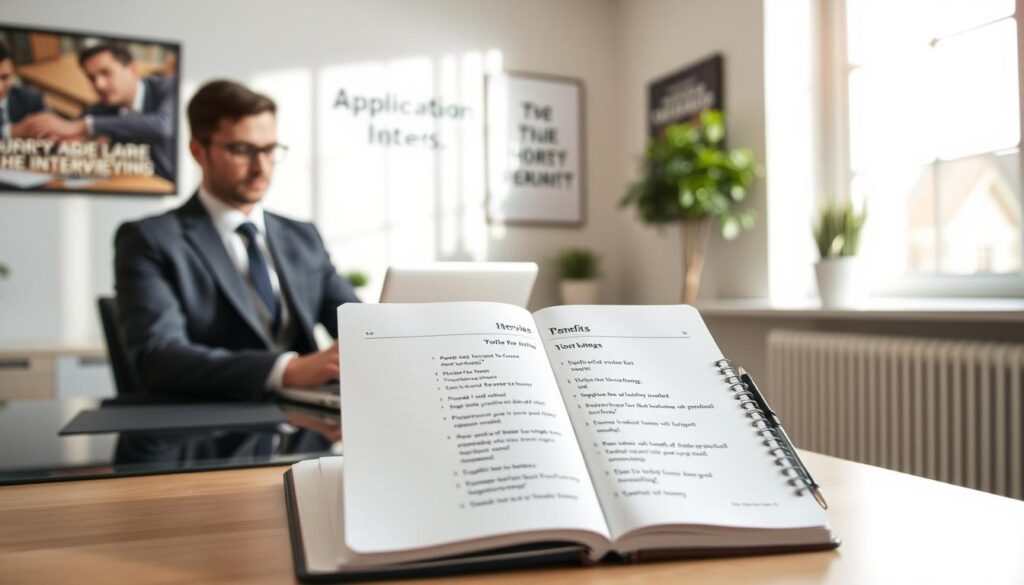
Look for clear info on company careers pages and benefits PDFs from companies like Apple, Microsoft, and Netflix. Cross-check details with Glassdoor reviews and employee posts on LinkedIn. This helps confirm facts and spot trends.
Check health plans such as PPO, HMO, and HDHP. Note employer premium contributions and options like HSA and FSA.
Also consider 401(k) matches, stock options or RSUs, parental leave policies, tuition reimbursement, wellness programs, commuter benefits, and flexible work options.
Remember legal and regional differences. U.S. states may require different offerings, while large firms often standardize packages.
Evaluate Your Needs
Think about your personal and family priorities. Consider medical care, prescription costs, childcare, eldercare duties, commute or remote work preferences, and long-term saving goals.
Use tools to measure costs and benefits. Total compensation calculators, cost-of-living comparisons, Healthcare.gov estimators, and retirement calculators from Fidelity or Vanguard help assign dollar values.
Focus on short-term costs like monthly premiums and deductibles. Then weigh them against long-term benefits such as 401(k) matches and stock growth.
Align Benefits with Personal Goals
Match benefits to your career and life plans. Candidates seeking advancement should pick companies with strong professional development and tuition reimbursement.
Those planning a family should value generous parental leave and flexible schedules more.
Choose three top negotiation priorities—for example base salary, signing bonus, and flexible schedule. Craft reasons tying personal needs to employer value.
Keep these priorities in a benefits checklist for interviews and negotiations. These tips help candidates present clear, business-focused cases when discussing offers.
Prepare Your Application Materials
Careful application materials set the tone for job interview preparation. A polished resume and a targeted cover letter show hiring managers a quick fit. They also support clearer talking points during the interview stage.

Below are practical steps to update a resume for roles with benefits or HR duties. Short, focused guidance helps keep clarity and ATS-friendliness.
Update Your Resume
Tailor the resume to the role by using job posting language. Recruiters at companies like Google and Amazon scan for matching keywords.
Use quantifiable results. List metrics, percentages, or dollar values for achievements. For example, note cost savings or budget sizes managed.
Highlight benefits-related experience, like negotiating vendor contracts, managing programs, budgets, or implementing cost-control measures.
Keep formatting clear and ATS-friendly. Use modern templates in Microsoft Word or Google Docs. Optimize the LinkedIn profile to match résumé claims.
Consider professional critique services like TopResume for an objective review.
Craft a Compelling Cover Letter
Open with a concise value statement showing why the candidate suits the role. Connect a past achievement directly to the employer’s needs in one sentence.
Use a short paragraph to show knowledge of the company and interest in their benefits or culture. Avoid sounding transactional. This shows cultural fit during job interview preparation.
Keep the tone professional and the length to three or four short paragraphs. End with a clear call to action about discussing how the role fits career goals.
Final submission checks improve outcomes in interview skills development. Confirm attachments and use PDF format when possible. Track applications in a spreadsheet with company name, submission date, recruiter contact, and benefits priorities. This supports later follow-up and interview prep.
Practice Common Interview Questions
Preparing answers for common prompts helps candidates seem confident and clear. Practicing improves your delivery and thinking. It also boosts your chances of acing your job interview.
Use short rehearsal sessions and full mock interviews during the week before the meeting.
Behavioral Inquiry Tips
Structured answers work best when talking about past actions. The STAR method — Situation, Task, Action, Result — gives responses shape and shows real impact.
For benefits talks, a candidate might share how they resolved a PTO conflict or launched a wellness program. They should also state the outcome with numbers.
Common prompts include:
- “Tell me about a time you negotiated a compensation package.”
- “Describe a situation when you advocated for employee benefits.”
- “How did you handle a disagreement with HR on benefits administration?”
Practice by recording mock interviews and asking peers or a coach for feedback. Rehearse short, clear answers that highlight measurable results.
These application tips help turn stories into proof of skill.
Role-Focused Question Prep
Expect different themes based on your role. Benefits administrators will face questions on ERISA compliance, COBRA, carrier relationships, and open enrollment strategies.
Non-HR candidates should be ready to link benefits to retention and performance.
Sample non-HR questions include:
- “How do benefits influence employee engagement?”
- “What benefits matter most to sales teams versus engineering teams?”
Study key topics: benefit terms like deductible, co-insurance, premium; retirement plan basics like vesting and employer match; and KPIs such as enrollment rates and cost per employee.
Use SHRM articles, IRS guidance, and BenefitsPRO for reliable learning.
Preparation rhythm matters. Do short daily rehearsals the week before. Also, complete two full mock interviews to sharpen timing and reduce filler words.
These best interview techniques support a smooth performance when acing your job interview.
Dress for Success
A polished appearance shapes first impressions quickly. Choosing the right clothes and grooming boosts confidence. It also helps your skills stand out.
Use these practical guidelines as part of successful interview tips and strategies.
Appropriate Attire for Interviews
Dress codes vary by field. Finance and law require conservative business attire, like tailored suits and ties for men.
Women should wear equally formal outfits. Tech and startups usually accept business casual, such as a blazer with a collared shirt or a smart blouse.
Creative roles may allow casual looks. However, it is safer to dress slightly more formal than expected.
For remote interviews, choose solid colors and avoid busy patterns. Check camera framing and set good lighting to look professional.
Wear clean, simple footwear. Keep accessories minimal and professional. Avoid strong fragrances that might distract an interviewer.
Importance of Personal Grooming
Good grooming shows reliability. Hair should be neat, nails trimmed, and jewelry minimal. Keep makeup subtle and natural if you use it.
Maintain good hygiene and fresh breath. For in-person meetings, make sure your clothes are pressed and lint-free.
Try on your full outfit a day before to check comfort and fit. When your attire or grooming shows religious practice, be ready to explain it.
Employers in the United States must provide reasonable accommodations under EEOC guidelines.
| Situation | Recommended Attire | Grooming Notes |
|---|---|---|
| Finance or Law | Conservative suit, neutral colors | Clean shave or well-kept facial hair, restrained jewelry |
| Tech or Startups | Blazer with collared shirt, smart blouse | Tidy hair, minimal accessories, natural makeup |
| Creative Roles | Smart casual with personal flair | Styled hair, polished shoes, avoid overpowering scents |
| Remote Interviews | Solid colors, simple patterns, camera-ready | Check lighting, frame, and background; fresh breath |
Professional presentation affects hiring decisions according to HR best practices. Pair these interview techniques with practice and preparation to show competence during your talk.
Know the Interview Format
Understanding the interview format helps you stay calm and prepare well. Review the schedule, check platforms, and plan to test equipment or arrange travel. These small steps reduce stress and help you develop better interview skills.
Different formats need different preparation. Common types include phone screens, video interviews on Zoom or Microsoft Teams, in-person meetings, panel interviews, and assessment centers.
Some talks focus on benefits with HR, compensation with rewards teams, or final offers with hiring managers. Knowing the format helps you focus your practice and use the right tips.
Interview timing depends on the format. Initial screens are usually 15–30 minutes. Standard interviews last 30–90 minutes.
Panels or assessments can go from 60 to 120 minutes. Plan your energy and breaks when sessions are long.
Logistics on interview day are important. Confirm time zones, double-check links, and keep a recruiter’s number ready for quick help.
For in-person visits, check parking and building access. Aim to arrive 10–15 minutes early. For virtual meetings, keep digital copies of your resume and benefits checklist handy.
Being emotionally ready helps you perform better. Try deep breathing before the interview and do a short power pose to calm nerves.
Prepare a one-page cheat sheet with key points to review before the interview. Do not use it while speaking. These tricks boost confidence and sharpen your skills.
Test your technology beforehand. Check your microphone, camera, internet speed, and update Zoom or Teams.
Keep a phone number ready as backup if connection problems happen. If tech issues arise, quickly contact the recruiter to suggest a phone call or reschedule.
Contingency planning is part of good interview prep. Have contact info and suggest new times if needed. Stay flexible and professional. Clear communication helps keep the interview on track toward a job offer.
Research the Company Culture
Before an interview, candidates should learn how a company’s culture shapes daily work. They can read mission statements, annual reports, LinkedIn posts, and employee reviews on Glassdoor and Indeed. This research highlights priorities.
Feedback about work-life balance, diversity efforts, and leadership style improves interview strategies.
Understanding Company Values
Check public culture statements from Salesforce, Patagonia, and Microsoft to see how values appear in practice. Look for evidence matching website words, such as Salesforce’s wellness programs or Patagonia’s environmental efforts. Candidate research should compare these statements to employee reviews and press releases.
Pay attention to metrics revealing real experience. Retention rates, eNPS scores, and awards like Forbes Best Places to Work give measurable context. Documenting data points supports focused application tips and helps craft strong answers.
The Role of Benefits in Company Culture
Company benefits often reflect core values. Generous parental leave suggests a family-friendly culture. Sabbaticals show investment in long-term growth. Mental health support and tuition reimbursement show commitment to employee development.
Assess if benefits align with employee reviews and case studies. If they do, mention this alignment during interviews. Framing priorities this way strengthens application strategies and shows thoughtful fit.
Prepare a short list of culture insights for the interview. Use these notes when asking about benefits. Clear examples linking personal priorities to company practices boost credibility and support success.
Prepare Questions to Ask
Preparing thoughtful questions gives candidates an edge when they get ready for a job interview. Good questions show curiosity about the role and respect for the hiring team’s time. They also show readiness to make informed decisions.
Candidates who follow successful interview tips use questions to confirm fit, find red flags, and gather facts before accepting an offer.
Timing matters a lot. Early interviews focus on cultural and role fit. Save detailed compensation and benefit talks for HR or the offer stage.
During screening calls, ask high-level questions about benefits and expectations. This helps see if the role matches priorities in application interview tips.
Questions About Benefits
- Can you walk me through the health insurance plan options and company contribution levels?
- How does the 401(k) match work and what is the vesting schedule?
- Are there opportunities for professional development or tuition reimbursement?
- What is the remote work policy and how does it affect benefits eligibility?
When you get an answer, ask for documents or averages to check claims. Requesting plan documents, employer contribution numbers, or anonymized use data helps you understand benefits beyond marketing words.
Clarifying Job Expectations
- What are the key responsibilities for the first 90 days and how is success measured?
- How is the team structured and who would this role report to?
- What is the typical career path for someone in this position?
- What are the expected in-office days, core hours, and remote work flexibility?
- What onboarding, mentoring, and resources will be available in the first three months?
Organize questions into two columns: must-ask and nice-to-ask. This method helps candidates stay focused and calm when preparing for a job interview.
Phrasing matters. Use collaborative wording like “How does the team measure success and how might the benefits package support those goals?”
Practicing this question list ahead matches application and successful interview tips. It keeps the talk professional, shows readiness, and helps candidates gather facts to evaluate an offer.
Master the Art of Body Language
Nonverbal signals shape first impressions and guide how an interview flows. Clear posture, steady eye contact, and calm gestures help you ace your job interview.
Small changes can improve your presence and support your interview skills.
Non-Verbal Communication Tips
Maintain steady eye contact that suits the setting. For in-person interviews, sit upright and lean forward slightly to show engagement.
For virtual meetings, look at the camera and keep it at eye level. Smile naturally and match your facial expression to your message.
Use a clear, steady voice to sound confident without seeming rehearsed. Keep hand gestures purposeful, and avoid fidgeting that distracts from your points.
Mirror small cues from the interviewer to build rapport. If they speak softly, lower your volume and slow your pace.
If they are energetic, raise your enthusiasm a bit. These choices reflect strong interview skills.
Making a Positive First Impression
Greet the interviewer with a friendly hello and, if suitable, a firm handshake. Arrive calm, be polite to staff, and treat all interactions as part of the interview.
At the end, restate your interest in the role briefly and thank the interviewer for their time. Highlight a key accomplishment concisely, giving credit to your team when relevant.
If an answer goes off-track, pause, admit the slip, and correct it. Watch interviewer cues to adjust pace and detail.
If time is short, give concise answers. If more depth is welcomed, offer examples showing your best interview techniques.
Follow-Up After the Interview
Thoughtful follow-up is a small habit that makes a big difference in job interview preparation. Prompt and clear communication keeps candidates top of mind. It also shows professionalism.
Record keeping of contacts, notes, and promises about benefits or start dates helps with later decisions.
Send a personalized thank-you email within 24 hours. Mention a specific point from the conversation. Restate your enthusiasm for the role.
If the position is highly competitive and mailing a note is possible, a brief handwritten message adds warmth.
Keep messages short and targeted. For a hiring manager, highlight one key skill that matches the job need.
For HR, confirm benefits priorities discussed and supply any requested documents.
Sending Thank-You Notes
Templates help busy applicants follow best practices for interview success. Use this HR-focused example: “Thank you for your time today. I appreciated our discussion about benefits and remain very interested. I can provide references or benefits documents if helpful.”
Use this hiring-manager-focused example: “Thank you for meeting with me about the project lead role. Our talk about client onboarding reinforced my interest. My experience with Salesforce and team coordination fits the needs we discussed.”
Inquiring About the Next Steps
Ask about the timeline before leaving if it is not offered. If a decision date passes with no update, send a polite follow-up 3–7 business days after that deadline. Keep the tone courteous and concise.
Include a brief status inquiry, reaffirm continued interest, and offer any extra materials such as references or a portfolio.
When juggling multiple offers, disclose timelines honestly without ultimatums. Request reasonable time to decide.
Maintain a contact log and copies of all thank-you notes. These records support clear decisions. They also strengthen application interview tips for future opportunities.
Reflect on Your Interview Performance
After an application, take time to reflect. This pause helps improve interview skills and shows which actions worked well or need work.
Assessing Your Answers
Create a simple checklist to score each answer. Check examples, clarity using the STAR method, and if benefits knowledge fits the employer’s programs.
Ask if responses matched the company culture. Also, see if questions were asked at the right times. Review practice recordings or notes to find pacing issues, filler words, and unclear phrasing.
Get feedback whenever possible. Ask a mentor, LinkedIn Learning instructor, or mock interviewer for helpful critique and new insights.
Track progress over time. Note changes in callback rates and offers to see how your interview preparation affects results.
Identifying Areas for Improvement
Note common problems like rambling answers, missing data, weak closings, or unclear benefit priorities. Focus on issues that repeat in interviews.
Create a plan with clear steps. Improve storytelling with STAR, study benefits like 401(k) and health plans, and refine negotiation talking points.
Use focused training tools. Try LinkedIn Learning courses, local career center workshops, SHRM certification modules, and speech coaching to sharpen skills.
Keep a journal after each interview. Log strengths, weaknesses, and next actions. Regular notes support growth and help apply tips in future interviews.
Keep Learning About Benefits
Staying current on benefits is key to interview success and career growth. Read sources like The Wall Street Journal, Bloomberg, and BenefitsPRO. Also check reports from the Employee Benefit Research Institute.
Subscribe to SHRM newsletters and set Google Alerts for company benefit news. This helps you spot changes in remote work perks, mental health coverage, and retirement plans. Watch for new offerings like student loan repayment.
Use this information to sharpen your interview strategies. Include recent trends, stats, and examples that show you know the industry well. Follow HR leaders on LinkedIn and join compensation groups.
Keep a list of benefits facts to cite in salary and benefits talks. Invest in formal and practical learning to boost interview skills. Consider programs like SHRM-CP/SCP, CEBS, or HRCI courses.
Use platforms like Coursera or Udemy for negotiation and interview practice. Attend the SHRM Annual Conference or local HR events to network and gather case studies. Turn new knowledge into strong talking points for interviews.
Practice using your insights in mock interviews and negotiation scenarios with tools like Pramp and Interviewing.io. Combining research, learning, and practice shows your expertise and focus on growth. These are key to standing out in interviews and application strategies.