

Advertisements
More than 9 million Americans used employment assistance programs last year. Yet many still do not know where to start. This guide explains how these programs work and who they serve.
It also shows how to use career development services to find meaningful employment. The purpose is clear: describe what employment assistance programs are and how to access them. You will learn how to use them effectively for your job search.
This guide covers different program types, including government, non-profit, and private options. It describes core services like job training, resume help, and interview preparation. The guide also covers access and eligibility, community roles, benefits, challenges, success stories, best practices, and future trends.
The target audience includes recent graduates, career changers, veterans, people with disabilities, and the long-term unemployed. It also helps professionals like career counselors and workforce staff. Readers follow steps to learn about programs, check eligibility, apply, engage with services, and use resources for job placement.
To begin, review the resources in Section 12. It helps you find programs in your state and connect with local workforce development boards or national directories. This step often leads to the fastest path from job searching to starting work.
Key Takeaways
- Employment assistance programs offer job search and placement help for diverse populations.
- Career development services include resume help, interview prep, and skills training.
- Programs come from government agencies, non-profits, and private providers.
- Follow a clear process: learn, check eligibility, apply, engage, and leverage local resources.
- Section 12 lists directories and local workforce boards to find programs near you.
What Are Employment Assistance Programs?
Employment assistance programs help job seekers move from searching to steady work. They offer services like job search coaching and vocational training. These programs run in public agencies, nonprofits, and private firms.
They often partner with employers and colleges to match skills with job demand.

Definition and Overview
Employment assistance programs provide targeted help to people seeking work. Services include one-on-one counseling, group workshops, online job portals, and hiring events. Examples include American Job Centers and state job service networks.
These programs aim to shorten job search times and boost long-term career success.
Purpose of Employment Assistance Programs
The main goals are to increase employability and reduce unemployment length. They also meet employer labor needs. Programs serve youth, veterans, people with disabilities, displaced workers, and underemployed adults.
Success is measured by placement rates, retention at 30 to 90 days, wage gains, and credential attainment.
Workforce development programs align training with local labor market needs to reduce skills mismatch. Employment support services improve hireability with résumé help and interview practice.
Together, these systems support economic mobility and stronger regional labor markets.
Types of Employment Assistance Programs
Different providers offer a mix of services to help job seekers. Public agencies, nonprofit groups, and private firms each bring strengths that fit varied needs.
Readers can match goals with the right provider to improve outcomes.
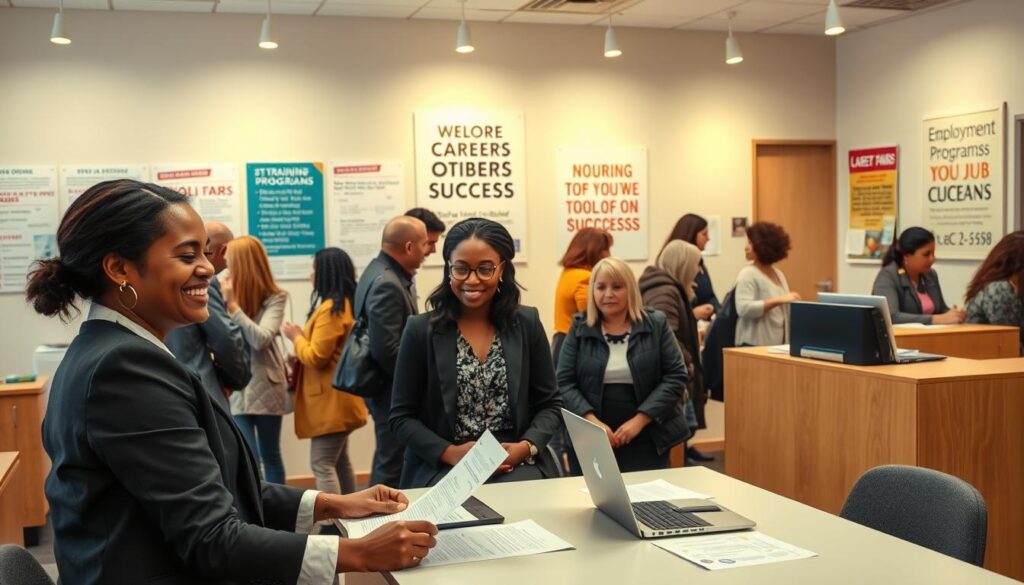
Government-Funded Programs
Federal and state programs form the backbone of many workforce development programs. The American Job Center network offers job search assistance, career counseling, and vocational training locally.
Trade Adjustment Assistance (TAA) supports workers displaced by international trade. Vocational Rehabilitation serves people with disabilities individually. The Department of Veterans Affairs runs employment services tailored to veterans. TANF provides employment components for families in need.
Funding often flows from federal grants to state and local workforce agencies. Eligibility is usually means-tested or targeted to specific groups. Employer incentives like On-the-Job Training help place job seekers in paid roles.
Non-Profit Organization Initiatives
Nonprofits fill gaps with wraparound supports that boost retention. Organizations such as Goodwill Industries and Year Up provide training and placement partnerships.
Dress for Success offers professional attire and coaching for women entering the workforce. Services often include job training, soft-skills coaching, transportation help, and childcare support.
Some Job Corps centers partner with nonprofits for hands-on training. Funding comes from grants, donations, government contracts, and fee-for-service work. Nonprofits often target underserved communities.
Their employment counseling and career development services address barriers beyond basic job matching.
Private Sector Employment Services
Private staffing and temp agencies provide direct placements and recruitment for employers. Outplacement firms assist workers during layoffs with resume writing and interview coaching.
Online platforms like LinkedIn Learning and Coursera offer upskilling and short courses valued by employers. Job boards such as Indeed and ZipRecruiter connect applicants to openings and employer hiring solutions.
Private providers may partner with public workforce programs on training and apprenticeships. Fee models vary: employer-paid placement fees, subscriptions, or employer-sponsored training. These partnerships expand access to job training and link talent to employers.
Key Features of Employment Assistance Programs
Employment assistance programs combine practical tools with personalized coaching to help people find work.
They connect job seekers to labor market info, coaching, and training valued by employers.
The following items show key features that make these programs effective.
Job Search Resources
Programs offer updated job listings through state job banks and employer posting portals.
Local workforce boards and American Job Centers run job fairs and virtual hiring events to link candidates with employers.
Labor market tools like data from the Bureau of Labor Statistics guide career choices.
Referral services and employer matching platforms quickly connect skills with job openings.
Resume and Interview Preparation
Participants get access to resume workshops and one-on-one critique sessions following industry standards.
Career counselors offer mock interviews and training in behavioral methods like the STAR method.
Services include help with cover letters, LinkedIn profiles, and handling background checks or employment gaps.
These services boost confidence and improve interview performance.
Skills Training and Development
Short training and certification courses prepare candidates for in-demand jobs in healthcare, IT, and trades.
Apprenticeships combine classroom learning with on-the-job experience.
Vocational programs and community college partnerships offer stackable credentials that employers value.
Soft-skills coaching covers teamwork, communication, punctuality, and problem-solving.
Career development services help learners plan next steps and build credentials for steady work.
How to Access Employment Assistance Programs
Accessing employment assistance programs starts with knowing who qualifies and the steps to follow. Many job seekers find help faster when they understand eligibility rules. They also benefit from knowing the usual application flow for job placement programs and employment counseling services.
Eligibility requirements vary by program type. Youth initiatives set specific age ranges. Veteran services and Vocational Rehabilitation focus on service members and people with documented disabilities.
Low-income thresholds, recent job loss, or industry dislocation often qualify applicants for support. Federal rules provide clear examples. Workforce Innovation and Opportunity Act (WIOA) programs prioritize public assistance recipients and veterans.
Vocational Rehabilitation needs medical documentation of disability and proof of employment barriers. The Senior Community Service Employment Program helps older workers.
Programs require specific documents at intake. Applicants usually provide photo ID, proof of address, Social Security number, income verification, and educational credentials.
Veteran documentation is required when applicable. Single parents might access TANF-linked services. Reentry programs assist ex-offenders in meeting job goals.
Intake and registration start the application process. Candidates can register online or visit American Job Centers and state workforce websites. Nonprofit intake lines and employer recruitment portals also accept applications.
After registration, staff schedule a skills and needs assessment. Assessments lead to an Individual Employment Plan or career plan. Enrollment happens when services fit the plan.
Case managers provide follow-up support through employment counseling. They also give referrals to job placement programs. Apprenticeships and training cohorts often have scheduled start dates.
Timelines and waiting lists vary. Some programs enroll candidates immediately. Others review applications and apply priority rankings.
Applicants should expect different wait times for specialized training or cohort-based classes. Tips help speed up approval and placement. Gather documents ahead of time and prepare a targeted resume.
Write a short statement about barriers and goals. Ask intake staff for help completing forms. Clear preparation improves chances with job placement programs and makes employment counseling more effective.
The Role of Community-Based Organizations
Community-based organizations connect residents to employment assistance programs. They bring services into neighborhoods. This reduces travel barriers and tailors support to local needs.
Local centers like Goodwill outlets and community action agencies deliver wraparound services. These services include case management and help with obtaining IDs or certifications. They also provide childcare referrals and transportation help.
Such support boosts participation in workforce programs. It also makes job placement programs more accessible to those in need.
Outreach is another strength. Organizations host workshops in libraries, shelters, and faith-based sites to reach those who may not seek online help. They offer mental health referrals and housing support. This helps candidates stay job-ready for longer.
Local Resources and Support
Neighborhood groups simplify access to career services with easy intake processes. They hold skills training sessions that match local job needs. This onsite approach helps hard-to-reach groups and builds community trust in employment programs.
Partnerships with Employers
Many community groups have strong employer ties to secure internships and apprenticeships. They co-create sector-based training with health systems, manufacturing, and industry partners. Such collaborations feed talent into job programs and lower hiring risks for employers.
Employer-focused services are common too. Organizations provide candidate screening, pre-employment training, and retention support. Local workforce boards often coordinate these partnerships. They link training pipelines directly to hiring needs. This creates a steady flow into workforce development programs.
Benefits of Employment Assistance Programs
Employment assistance programs offer clear benefits for job seekers and employers. They use targeted training, employer partnerships, and extra support to improve hiring results. You will learn how these programs raise wages, shorten hiring times, and boost long-term retention.
Increased job placement rates
Job placement programs increase matches by fitting a candidate’s skills with employers’ needs. Apprenticeships and Workforce Innovation and Opportunity Act (WIOA) programs provide industry credentials that employers value.
These career services lead to higher placement rates and better median earnings for job seekers. Employers save on recruitment and fill roles faster with skilled candidates. Support services like transportation vouchers and childcare subsidies help new hires stay longer.
Support for diverse populations
Programs customize services for veterans, people with disabilities, youth, older workers, and those returning from incarceration. Agencies such as the Veterans’ Employment and Training Service and state Vocational Rehabilitation offer accommodations and literacy help.
Targeted support reduces gaps by providing culturally aware case management and language-accessible resources. Combined with career services, these efforts tackle barriers and improve fair outcomes across communities.
Success Stories from Employment Assistance Programs
Real-world outcomes show how employment assistance programs turn plans into paychecks. Participants move from assessment to credentialing. Then they find stable work. The following case studies and feedback show common paths to better jobs and higher wages.
Case Study: Overcoming Barriers
A displaced manufacturing worker enrolled in a Workforce Innovation and Opportunity Act (WIOA) funded class.
The community college offered hands-on job training programs in CNC machining. After skills assessment, the worker got a tailored training plan. It led to a nationally recognized credential.
Employer connections through the college’s industry partners helped match a job placement at a regional manufacturer. The worker reported higher pay and steady hours within six months.
A veteran used Department of Veterans Affairs employment counseling along with a local union apprenticeship placement.
Career coaches helped with credential transfers and classroom requirements. The veteran completed the apprenticeship and transitioned to a civilian trade. He maintained steady employment while improving trade skills.
A single parent accessed a nonprofit’s wraparound support, including childcare and transportation aid.
The organization combined these services with vocational training in healthcare administration. Case managers coordinated assessments, training schedules, and employer interviews. Follow-up support and referrals led to steady jobs and wage growth.
Testimonials from Program Participants
Program evaluations highlight common themes. Many participants describe increased confidence and better interview skills after short counseling sessions. They also praise the quality of training and helpful case managers who arranged interviews and job placements.
Surveys show quicker job searches and better job quality for those completing training programs. These results align with U.S. Department of Labor and nonprofit reports that note credential attainment and improved earnings.
Common success factors include accurate assessments, tailored training, employer partnerships, credential attainment, and follow-up support. These elements appear often in success stories and verified program reports.
Challenges Facing Employment Assistance Programs
Employment assistance programs face many pressures that limit their reach and impact. Funding limits and employment stigma affect who seeks help. These challenges need coordinated policy, clear communication, and strong partnerships between agencies, employers, and community groups.
Funding limitations reduce program capacity at federal, state, and local levels. WIOA funding and competitive grants affect service levels. Short-term grants and changing budgets cause waiting lists and fewer training spots.
Small nonprofits rely on unstable mixes of grants, donations, and fees. This causes staff turnover and interruptions when funding is uncertain.
Policy tries to stabilize services and expand effective pilots. Braided funding blends federal, state, and private money. Public-private partnerships increase employer investments in training and hiring.
Performance-based contracts reward results and help keep strong programs running.
Employment stigma keeps some job seekers from using programs labeled as “unemployment help” or “low-skilled training.” Middle-income workers changing careers may avoid these services. Employers sometimes undervalue referrals or doubt candidates’ readiness.
Reducing stigma needs planned branding and outreach. Calling programs career development and upskilling draws a wider audience. Employer education and testimonials help change views.
Sharing clear success data shows that employment support services help businesses, workers, and communities.
| Challenge | Causes | Consequences | Practical Responses |
|---|---|---|---|
| Funding limitations | Short grant cycles, competitive WIOA allocations, reliance on donations | Waiting lists, limited slots, interrupted staffing | Braid funding, build public-private partnerships, adopt performance contracts |
| Employment stigma | Perceptions of services as for the unemployed or low-skilled, employer bias | Lower participation by career changers, undervalued referrals | Rebrand as career development, run employer outreach, publish success data |
| Provider capacity | Unstable revenue streams, limited training infrastructure | Difficulty scaling pilots, inconsistent service quality | Invest in shared infrastructure, secure multi-year funding, measure outcomes |
Best Practices for Utilizing Employment Assistance Programs
Effective use of employment assistance programs begins with a clear plan. Participants should set short-term and long-term targets that match local job trends.
Counselors at organizations such as Goodwill or local American Job Centers help align goals with demand in healthcare, skilled trades, and technology.
Setting Goals and Expectations
Job seekers benefit from SMART goals that spell out what to achieve and when.
An Individual Employment Plan lists steps like finishing a certification, applying to several employers weekly, or attending networking events.
Expectations must reflect realistic wage ranges and credential needs. Reviewing Bureau of Labor Statistics data helps set timelines and identify hiring cycles.
Planning for temporary work, apprenticeships, or part-time roles creates pathways to long-term careers.
Staying Engaged with Program Staff
Regular contact with case managers improves success.
Participants should attend workshops, complete assignments such as practice interviews, and report job leads or barriers.
Proactive requests for mock interviews and resume critiques speed the job search process.
Programs often provide supports like childcare or transportation assistance to remove barriers to participation.
After placement, requesting retention coaching and follow-up employment counseling increases job longevity and opens doors to career development.
Tracking progress matters. Documenting successes supports future training referrals and shows the value of job search assistance.
| Practice | Action | Benefit |
|---|---|---|
| Goal Setting | Create a SMART Individual Employment Plan with milestones | Clear milestones lead to steady progress toward employment |
| Labor Market Alignment | Use local data to match skills with demand | Improves chances of timely placement and appropriate pay |
| Regular Engagement | Attend workshops, meet with case managers weekly, update staff | Maintains momentum and access to job search assistance |
| Use of Supports | Apply for childcare, transportation, or tuition aid offered | Reduces barriers and increases program completion rates |
| Post-Placement Follow-Up | Request retention coaching and periodic check-ins | Boosts job retention and opens channels for career development services |
Future of Employment Assistance Programs
The landscape of employment assistance programs is changing as employers, educators, and policymakers react to the evolving labor market. New models focus on linking training directly to real job openings. They also aim to protect access for underserved communities.
These changes reflect broader trends in workforce development. There is growing interest in programs that deliver measurable results.
Trends in Workforce Development
Sector-based strategies are becoming more common. Job training now aligns with demand in healthcare, IT, advanced manufacturing, and logistics. Employers like Kaiser Permanente and Amazon work with local providers to shape curricula that meet hiring needs.
Apprenticeships and earn-and-learn models gain popularity as alternatives to four-year degrees. Registered apprenticeship growth shows employers value on-the-job learning with pay from day one. This shift creates paths for people needing income while training.
Equity and inclusive hiring are more important than before. Workforce development now uses data-driven methods to measure outcomes for underserved groups. Funders and workforce boards use detailed metrics to close gaps in placement and wages.
Outcome-based contracting links funding to results. Pay-for-performance models push providers to focus on placements, retention, and earnings. Cities and state agencies test these models to improve accountability and scale effective programs.
The Impact of Technology on Job Assistance
Digital platforms are changing how employment programs connect people to work. Job matching sites, virtual coaching, and AI-driven skills assessments speed hiring. They also help tailor learning paths.
Online learning and stackable micro-credentials let participants gain skills in short modules. Employers can quickly verify these competencies. Platforms like Coursera and LinkedIn Learning integrate with local programs to offer recognized credentials.
New tools include virtual reality for simulated skills practice. Learning management systems help deliver courses at scale. Labor market information systems provide timely data to design training for in-demand roles.
Technology widens access but reveals a digital divide. Unequal access to devices, broadband, and digital skills creates barriers. Supports like device lending and digital coaching remain essential for fair access to job training and assistance programs.
| Trend | How It Helps | Key Challenge |
|---|---|---|
| Sector-Based Training | Aligns skills to employer demand in healthcare, IT, and manufacturing | Requires strong employer partnerships and curriculum updates |
| Apprenticeships & Earn-and-Learn | Provides paid pathways and on-the-job experience | Scaling to new industries demands employer buy-in |
| Outcome-Based Funding | Ties resources to measurable job placement and retention | May pressure providers to prioritize easier-to-place candidates |
| Digital Platforms & AI | Improves matching and personalizes training pathways | Creates access gaps for participants without broadband or devices |
| Micro-Credentials & Stackable Learning | Enables flexible upskilling and clear employer-recognized milestones | Credential proliferation can confuse employers without standardization |
Resources for Finding Employment Assistance Programs
Several reliable national directories and websites collect employment assistance programs in one place. CareerOneStop, sponsored by the U.S. Department of Labor, offers job search tools, a training finder, and a local service locator.
USA.gov lists federal benefits and services. The Department of Labor provides WIOA and apprenticeship listings, Veterans’ Employment and Training Service (VETS) pages, and Occupational Information from the Bureau of Labor Statistics for labor-market context.
National directories and online learning platforms
Nonprofit networks and portals expand access to job placement programs and training options. Goodwill operates an online job board and placement services.
Year Up lists program locations for young adults. Apprenticeship.gov aggregates registered apprenticeship opportunities. For skills-building, platforms like Coursera, edX, and LinkedIn Learning are used by workforce programs and certification partners.
These platforms help strengthen resumes and credentials.
Local workforce development boards and American Job Centers
Local Workforce Development Boards administer WIOA funds and coordinate American Job Centers. These centers connect job seekers to career coaching, training scholarships, employer partnerships, and labor market research.
CareerOneStop and state labor department sites list local workforce development boards and American Job Center locations. This helps users find nearby employment support services.
When contacting a local board, prepare documentation and ask about program waitlists and funding cycles. Inquire about sector partnerships and upcoming cohort start dates. Also, request referrals to community-based organizations for wraparound supports.
These steps help people access job placement programs faster and use the available employment assistance resources well.